There is a growing consciousness around, and commitment to, the collective economic and social transformations that are required to achieve shared climate goals like the Paris Agreement, which seeks to keep the global average temperature rise well below 2°C (3.6°F) above pre-industrial levels, with the ultimate goal of limiting it to 1.5°C (2.7°F).
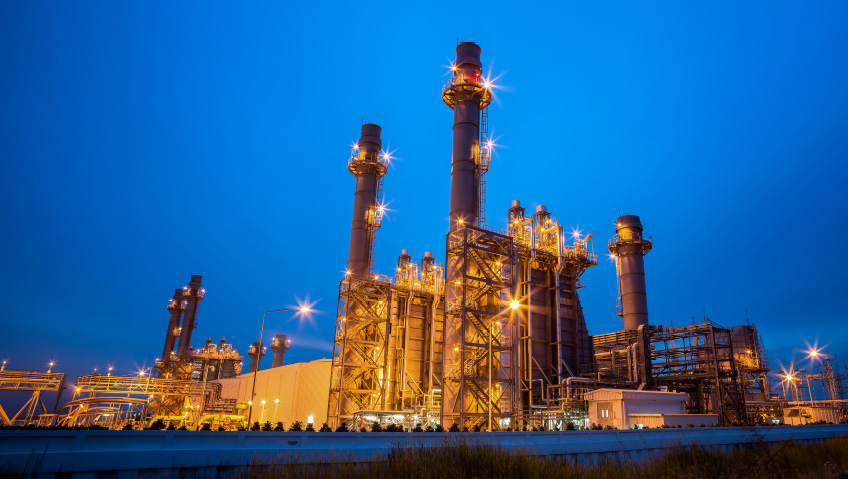
With this, every aspect of the supply chain is under pressure to minimize its environmental impact while maximizing value, including heavy industry, which is the source of goods, materials, and equipment that keeps the economy moving. It is also the largest source of carbon emissions in the world.
Heavy industry represents 70 percent of total global industry consumption, as well as nearly 80 percent of emissions, which means there is much to gain from integrating new technologies and sustainable approaches into its function and operation to achieve desired results. Among those efforts is a push to electrify industry.
Time for some heavy lifting
Heavy industry is characterized as anything that is highly energy intensive, requiring fossil fuels or massive amounts of electricity to power its operations. These sectors, including chemicals and petrochemicals, iron, aluminum and steel, cement, and pulp and paper, are major emitters that remain crucial to the functioning of the economy. As such, there is increasing pressure to reduce these emissions while optimizing performance and profitability, and one of the ways this is being done is through electrification—and not simply electrifying, but finding ways to electrify better.
Alongside electrification, there must be a push to invest in renewable energy to meet the growing demand, as well as the adoption of lean manufacturing principles and technologies to support these advancements. According to a 2024 IEA (International Energy Agency) report, renewables are on course to meet nearly half of global demand for electricity by 2030, due in large part to supportive government policies as well as advancing technologies and capacities, such as solar. Between 2024 and 2030, the global economy is expected to add 5,500 gigawatts (GW) of new renewable energy capacity, which is almost three times the increase seen between 2017 and 2023.
“Renewables are moving faster than national governments can set targets for. This is mainly driven not just by efforts to lower emissions or boost energy security—it’s increasingly because renewables today offer the cheapest option to add new power plants in almost all countries around the world,” writes IEA Executive Director, Fatih Birol. “This report shows that the growth of renewables, especially solar, will transform electricity systems across the globe this decade. Between now and 2030, the world is on course to add more than 5 500 gigawatts of renewable power capacity—roughly equal the current power capacity of China, the European Union, India, and the United States combined. By 2030, we expect renewables to be meeting half of global electricity demand.”
While solar leads the way, more needs to be done to develop and adopt sustainable biofuels, biogases, hydrogen, and e-fuels, though their prices remain prohibitive for mass adoption at this time, limiting their value as an industrial input.
In the U.S., the Energy Information Administration (EIA) believes that the nation’s consumption of all forms of energy is likely to increase up to 15 percent between 2022 and 2050, but luckily, the use of renewables is likely to double over the same period, suggesting the sector is well positioned to adapt to shifting demand.
In Canada, demand is shifting. The use of heavy fuel oil in industry has decreased 90 percent between 2000 and 2019, with manufacturers instead turning to natural gas and electrification to power their operations. According to the Industrial Consumption of Energy (ICE) survey by the Office of Energy Efficiency (OEE) at Natural Resources Canada (NRCan), energy intensity dropped by 8.5 percent between 2000 and 2019, representing an absolute decrease in energy use of 405.6 petajoules, equivalent to the amount of energy consumed by cars in Quebec, Manitoba, and Prince Edward Island (PEI) in 2019. And while this represents a positive trend from a sustainability standpoint, other particularly important changes were taking place behind the scenes to be able to leverage the advancements that enable industry to better power operations.
An industry in transition
When it comes to industrial electrification, lower-temperature applications, those that operate below 100 degrees Celsius, have led the transition, while medium-temperature applications, up to 300 degrees Celsius, and heavy industries, which operate at temperatures exceeding 300 degrees Celsius, are now starting to catch up.
Investments in sustainability are often accompanied by the optimization of operations, the adoption of lean manufacturing principles, and ultimately, more responsive and profitable output. Digitization and smarter controls are proving to be one of the most powerful trends driving and complementing industrial electrification. Luckily, falling technology costs and technological readiness are advancing industry forward.
Smart technologies like artificial intelligence (AI), machine learning, and the Internet of Things (IoT) can be integrated to optimize the electrification of industry, while mature technologies with smaller footprints and greater capabilities, such as electric boilers, resistance heating, electric arc furnaces (EAF), and induction heating, are already having a tangible impact.
In Sault Ste. Marie, Ontario, Algoma Steel, a steel producer that has been operating since 1901, made the transition from fossil fuel-intensive operations to electric arc furnace (EAF) steelmaking to power its high-heat operations. The steelmaker began construction on two state-of-the-art EAFs in 2022 to replace its existing No. 7 Blast Furnace, Cokemaking, and Basic Oxygen Steelmaking operations; the second EAF is expected to be completed by 2029. Upgrades to the Ontario grid are now being built to support the energy needed by Algoma Steel to operate the two EAFs after 2029.
The process leverages recycled scrap metal and electricity rather than smelting iron ore with coke in a high-temperature furnace, which results in higher emissions due to the use of non-renewables.
The investment enables Algoma to reduce carbon emissions by up to 70 percent, or nearly three million tonnes of CO2, as well as eliminate benzene, benzo(a)pyrene, particulate matter, and sulphur dioxide emissions, with the goal of achieving carbon neutrality by 2050. Further, the steelmaker projects the investment will add 700 kilotons of finished steel capacity, aligning its steelmaking capacity with its rolling capacity.
The downside: this investment in capacity also came with the loss of more than 1,000 jobs, representing 40 percent of its workforce, and a unique set of challenges related to powering its operations.
When it comes to electrification, grid reliability becomes an issue, and recently, the steelmaker had an unexpected shutdown that lasted three weeks due to challenges with a turbine at the power generating station. Rolling blackouts in the community and a temporary hiatus demonstrate that the power needs of the operation may exceed the capacity of the existing infrastructure, and as demand for energy grows, interruptions to service become more likely wherever capacity falls short.
The potential of electrified industry
As the rate of technological advancement continues to accelerate, so too does the potential of industry to leverage these capabilities to power smarter, more efficient, optimized operations. Potential, however, is only as great as the capacity of the infrastructure and the systems which support it, which includes a strong regulatory environment that supports the adoption of more sustainable approaches.
Through smart policies, government subsidies and incentives, and the forward-thinking leadership of companies committed to investing capital, advancements in renewable energy and efforts to electrify will be most impactful.
Countries have begun implementing carbon pricing and emissions reduction targets to encourage cleaner energy solutions, creating favourable economic conditions that will accelerate the adoption of more sustainable industrial approaches. And electrification is just the start. The push to adopt more circular economic practices will also enhance activities like electrification. By simultaneously reducing waste and integrating consciousness at every level of the operation, companies, even in the heaviest of industries, can reduce their environmental footprint.
And, not unlike other specialized sectors where skilled talent is dear, to have a successful transition away from fossil fuel dependency will also require investment in workforce, both availability and capability, and a rethinking of how we educate the next generation of workers in the age of electrification.
Energy security concerns are also especially important, both from a geopolitical standpoint, given how closely tied energy insecurity is to ongoing global uncertainty, and from a grid readiness perspective, as seen with data centres and the temporary pause at Algoma’s EAF.
While companies are investing in capacity, so too must governments to ensure there is enough energy to power the lives of people and industry, without doing so at the expense of the environment. Only then will electrified industry truly shine.