
Who would have thought that the ancient practice of making liquid bread, more commonly known as beer, would one day form the basis of modern precision fermentation, a technology now harnessed for high-volume protein production?
Once used as a staple to help quench the thirst of the hordes of Egyptian slaves responsible for erecting the breathtaking structures of its ancient empires, a more sophisticated iteration of old-fashioned fermentation is now being leveraged in response to global food poverty.
So what is precision fermentation, and how are nutrients derived from it? What was once science fiction has now become reality. Today, yeasts double as “factories,” loaded with animal genes while feeding on water and sugar to produce animal-identical proteins, before the yeast and water medium is removed to render commercially viable animal-free protein.
Fermentation is the process responsible for making bread rise, cheese form, and wine and other fermented foods and beverages take shape. There are also fermented Asian soya products like tempeh and natto. Ultimately, proteins, among other organic compounds, result from the metabolic process by which yeast or bacteria convert sugar into carbon dioxide and alcohol during fermentation.
Precision yeast fermentation is a significantly more complex process than that of the wild yeasts found in heritage winemaking, for instance. Historically, fermentation has always been difficult to control, presenting food producers with a challenge. This unpredictability made it necessary for those using fermentation to create food to master the process in order to achieve the highest possible quality.
Now, however, scientists have found ways to precision-engineer fermentation, transforming single-cell organisms into micro-production facilities that replicate the nutritional value of foods containing both plant and animal protein. The rationale? To feed growing populations while reducing dependence on naturally cultivated plant food and animal slaughter as sources of protein and other nutrients, by simulating bioidentical food substitutes in laboratories. By programming target molecules to replicate those found in egg or dairy proteins, the goal is to manufacture what are currently considered premium “ingredients” in controlled environments at scale.
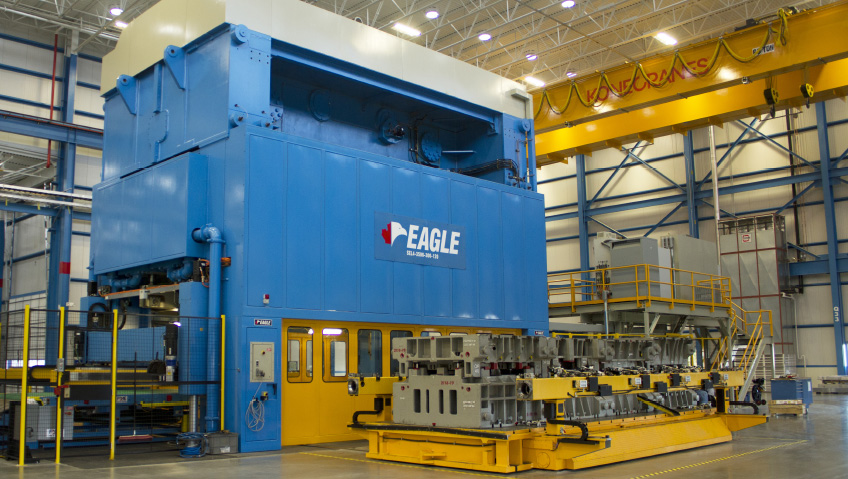
However, transitioning food manufacturing of this kind from the controlled environs of laboratories to fabrication facilities is proving complex. Several factors challenge the transition from concept to scalable reality, including the tremendously high costs that rarely translate well from pharma to biotech food fabrication. According to experts, these are linked to facility and process sterilization; water purity; expensive downstream processes like purification, separation, drying and concentration; and product functionality, all while navigating food safety infrastructure requirements and other costs.
As a result, reports indicate the need for fabrication systems built on consistency and repeatability across large volumes over long periods of time. These challenges have not been sufficient to dishearten some of the continent’s leading pioneers in the industry, however.
According to MarketsandMarkets, 2025 saw the North American precision fermentation ingredients market reach over $2.1 billion, forecasted to climb by close to 50 percent annually to an estimated $15 billion by 2030. This is ascribed to the region’s early adoption of biotechnology and animal-free protein alternatives. Reports also note that efficient regulatory processes support market growth. The United States currently holds 80 percent of this market, with Canada’s biotech industry showing rapid growth, supported by research projects and government grants for research and development in the field. With Mexico offering reduced overheads, its market is also growing at a healthy pace.
Some alternative protein creators driving growth in the United States’ sector include Geltor. Based in San Leandro, California, it is famed for “optimizing” amino acid sequences from nature by employing Biodesigner AI. There is also MYCO Technology in Aurora, Colorado, a food innovator whose products are based on fungi. Another local changemaker is Change Foods, committed to removing cows from the dairy equation through single-cell yeast fermentation.
Further afield, a manifesto by Food Manufacturing Technologies Europe (FMTE) notes that crucial processes like waste reduction, recycling, and reusing water, alongside decarbonizing technologies, all contribute to curbing the environmental impact and long-term costs of precision fermentation. Its direct goals are to create a manufacturing environment of possibility where digital ecosystems are encouraged, infrastructure is well-funded, and regulations are efficiently managed to enable the industry’s positive growth.
Moreover, FMTE advocates and supports the development of what it calls “novel foods,” while driving the availability of such food sources by scaling up economic contributions. It also supports cross-discipline collaborations in a bid to create a healthy future food economy for Europe.
FMTE’s current forecast for 2030 predicts the food fabrication technologies industry will reach an estimated value of around $120 billion. This is based on past figures showing rapid growth, from over $13 billion in 1997 to more than $30 billion just three years ago. Moreover, the European industry is poised to provide around 100,000 jobs in the near future.
Asia is also an active part of the market. According to the Korea Advanced Institute of Science and Technology (KAIST), in an article published in Phys.org in August of this year, successful growth for industrial-scale microbial food fabrication relies on operators’ ability to integrate fabrication platforms into cohesive systems. These must function across entire life cycles, from product development and strain development to industrial production, quality control, and beyond. With research showing that environmental benefits alone are not enough to drive product adoption, developers have their work cut out to create fabricated food that also appeals to the senses.
While creating alternatives that people actually want to eat is a current challenge, investor spending appears to be dictated by speed to market and how easily the outcomes of regulatory approval procedures can be forecast. These are not the only curveballs, however.
Considering its potential impact on the human body, the debate surrounding the economics and ethics of laboratory-developed food has become one of the most pressing conversations of our time. In all fairness, this is a far larger topic than can be done justice to in a brief article such as this, and it is worth noting the sober opposition of thought leaders such as Dr. Vandana Shiva, an environmental activist and food sovereignty advocate who trained in physics at the University of Punjab and earned her PhD from the University of Western Ontario with her dissertation, ‘Hidden Variables and Locality in Quantum Theory.’
Dr. Shiva maintains that lab-grown food contributes to, rather than alleviates, ecological crises. “We must therefore work actively to renew and regenerate the Planet by participating in ecological processes of reciprocity and restoring biodiversity,” she writes on Navdanya International. “For this to happen, the act of eating must once again become an ecological act, so that the false solutions proposed by the advocates of artificial food, which do nothing to counter the profit-driven agri-food industry, do not create further crises.”
Whether one is for or against lab-grown protein, one aspect that cannot be ignored is the alleviation of animal suffering this biotechnology promises. Only time will tell the true long-term effects of bioidentical artificial foods on the minds and bodies of humans, however.