Recognized as the market leader in the design, engineering, and manufacture of low-floor shuttle buses and adjacent mobility solutions, Optimal Electric Vehicles is so much more than the products it offers.
Driven by an engineering-first mindset, this Elkhart, Indiana-based manufacturer seeks to improve accessibility in the market, providing not only accessibility-forward vehicles, but the choice of alternative engines with its low-floor offering.
Though Optimal’s expertise begins with electric, the engineering backbone of the company has enabled it to pivot with market conditions to expand its original purpose through the addition of alternate fuels to ensure buyers can have full confidence in the product and its range.
Optimizing automotive
Behind Optimal Electric Vehicles is parent company Optimal, which was founded in 1986 by Dr. Song L. Young, widely recognized across the world for his pioneering breakthroughs in the areas of computer-aided engineering (CAE), vehicle optimization, and simulation-driven product development.
His work has changed the very nature of how modern OEMs design, engineer, and validate vehicles, and as a result, he saw an opportunity to break into the market himself with a niche product offering that leveraged his expertise. This enabled Optimal, as well as its clients, to accelerate innovation, optimize performance, and reduce development costs through Dr. Young’s sophisticated methodologies.
Optimal, aptly named, was established as an engineering services company that supported Detroit automakers and evolved alongside the sector. While the company remains true to its original purpose—accessible electric vehicles, chiefly the low-floor shuttle model—the means has shifted with market demand, which is fueled not only by shifting legislation but also consumer confidence in the range of electric, which Optimal seeks to overcome with its solutions.
“The original designs were all about accessibility and serving an underserved community in a dignified kind of way. So that’s really what we focus on,” explains Executive Vice President, Jeff Hiatt.
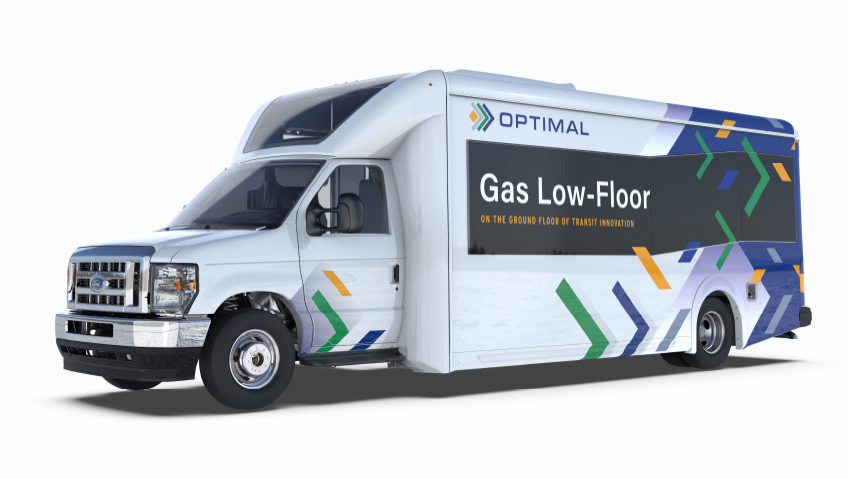
“Given the recent changes in administration and the recent changes in focus on EVs in general, we’ve announced that we’re testing and validating a gas version of our vehicle that will also allow for us to do CNG and propane, so it will be a complete product offering that covers not only no-emission vehicles, but low-emission vehicles as well,” he adds.
Further to having the choice of engine/fuel type, customers enjoy the confidence of knowing that the vehicles have been built on years of testing and validation for quality and performance. “The last three years have really been focused on serial production, marketing, brand building, and all those activities to get the business in a growth stage,” Hiatt shares.
The company’s history of offering lightweighting, CAE, and other engineering services to premier automakers illustrates capabilities that translate well into electric and alternate fuel applications. “We’ve had three years of full production and bringing the product to market, as well as, along the way, developing a conversion technology whereby we can take existing vehicles or new vehicles, gas vehicles, and convert them to just a standard-floor type vehicle,” says Hiatt.
He explains that, by using a Ford E450 donor chassis stripped of all its components, Optimal can modify the frame to support custom builds with EV components and the resulting body.
“Because of the business’s expertise in engineering, especially in the world of CAE, and being able to model and test different iterations of the bus, it really kept a lot of our development time and cost down to be able to do what we do today with converting the vehicle,” Hiatt explains of the product, purpose-built from the ground up.
What especially sets the vehicle apart is its low floor, which addresses a market segment that has long been underserved. “Low-floor shuttle buses have a lot of advantages,” says Hiatt, noting that they don’t require a lift. “We have a ramp design that’s close to the ground so people in a wheelchair can actually get themselves in and out of the vehicle, so it’s a much better design, much cleaner design, and it provides a level of dignity for people.”
A winning business model
Strategically located in the cradle of RV country, which gives it a good supply base, Optimal Electric Vehicles is well positioned to monitor and anticipate future trends, engineering its products in response to the data collected and continuing to do good for an underserved market.
By adding alternate fuel types that operate to the same standard of performance of its EVs, Optimal addresses the persistent anxiety that exists within consumer sentiment around the range of electric vehicles, and thus the company continues to take advantage of market opportunity. The market is particularly strong in Canada and the U.S., which is where Optimal will focus going forward, continuing to secure market share and consumer confidence through its trusted dealer network.
“We’re constantly working with our dealer network to educate them and train them on the product, any new enhancements we make to the products,” Hiatt explains, to give its supporting players all of the tools necessary to be successful.
Ultimately, Optimal is driven by a culture of giving back and ensuring that it can grow its impact to serve the greater good through greater accessibility to accessibility. It’s a simple, yet noble, undertaking.
“The sum is greater than the parts within our business—leveraging the technical expertise coupled with practical expertise in the company and combining those to really create the value that we need for our customers,” is what Hiatt feels drives the culture.
Whether it is the growth of its EV line or alternate fuel platforms, the next 18 to 24 months are going to be exciting for the company and something for the market to watch, particularly those who are interested in a highly innovative company that is doing good work from all angles.
“We did the hardest thing first: we created an electric vehicle. Now we’re going back and creating variants of that that are much simpler to engineer to bring to market, so we’re positioned well for the future,” Hiatt notes of the company’s outlook.
Over the near term, the market can expect that Optimal will continue to bring new products and innovations to the fore, doing so with a small, lean team of industry experts that bring unmatched experience and capacity so it can have a significant impact without overextending itself. And long term, always steadfast to its original purpose and goal, Optimal will continue to find ways to improve the performance of its offerings to ensure that accessibility is accessible to a greater number of people.