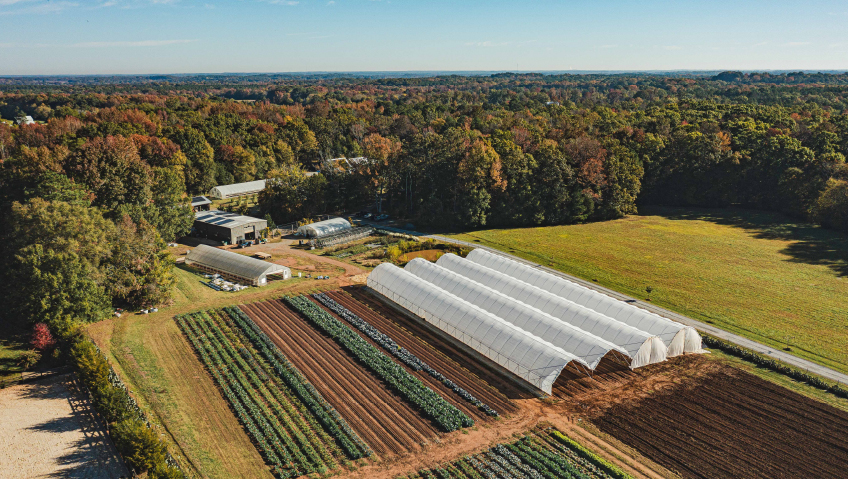

In Chesterfield County, South Carolina, relationships are the foundation of the region’s economic and social strength. Leading the way, building the bridges, and facilitating momentum on behalf of the many industries and employers that call the area home is Chesterfield County Economic Development.
Led by Director, Libby Lear, under the directive of county officials in partnership with local, regional, and state stakeholders, this collective is dedicated to advancing Chesterfield County in a way that makes sense, growing opportunity while protecting the quality of life the community so reveres.
Leveraging assets and celebrating wins
Key to economic development and social investment in Chesterfield County is its firmly grounded sense of what it is, what it wants to be, and how it intends to get there. The goal is to continue to elevate the population of 45,000 and growing while leaning into the county’s rural charm, history, and natural endowments, including its cost of living, available land, and a business-friendly approach to development.
Located along the eastern seaboard halfway between New York and Miami, with access to a market of 1.6 million people within a 60-mile radius, Chesterfield County is not far to markets, mountains, metros, and the beach, which all serve as the backdrop for its exceptional quality of life and economic strength.
“We can be at Charlotte Douglas International Airport in an hour from our industrial park in Pageland, and to companies, that makes a big difference,” explains Lear. “We really have good proximity to Charlotte, Columbia, and Florence. We’re right in the middle of those three cities. The area that’s growing is primarily Pageland because of its proximity to Charlotte.”
Regionalism is part of the development strategy in the county given the layout. The center of the county is known as “the wildlife refuge.”
“One fifth of our county is state and national forests—over 100,000 acres,” says Lear. The county is fortunate, though, that the eight municipalities pull together for common goals and events.
Many landowners have their property planted in pines also. The lumber industry has taken a hit in the southeast recently so that has been a challenge for anyone involved in the timber business.
Cheraw is the largest town in the county and home to several large manufacturers. The downtown has been revitalized, especially since Springhill Suites built there. “That was a huge catalyst for rejuvenating Cheraw, so now if you go downtown, there’s nightlife,” Lear says of the restaurants and other exciting additions that prove attractive to residents, visitors, and investors alike.
Economic diversity and strength
The county is home to automotive, aerospace, and defense suppliers. In addition to advanced manufacturing, there’s agribusiness, food and beverage and specialty textile companies.
Foreign direct investment (FDI) remains a focus of the county, but also the state. A memorandum of understanding was recently signed between South Carolina and Ontario, Canada to expand trade and collaboration. “Foreign direct investment in the state of South Carolina right now is huge. We’re represented by many different countries around the world,” explains Lear, including Dutch, German, Chinese, French, and Canadian companies.
While the loss of Stanley Black & Decker was a major hit several years ago, the strength of industries like Milliken-Highland, Aalberts, ATI, Carpenter Technology, Carolina Canners, Doman Tucker Lumber, Screwmatics, and Schaeffler Group, the largest employer in the Pee Dee Region, is the county’s backbone. The recent announcement by Canadian company, Cyclic Materials, is a major win for the region as well as the environment. This $82 million investment will reclaim the rare earth elements (REEs) from end of life items, separate the rare earth elements, and prepare them to be made into permanent magnets again.
“It’s really put South Carolina and Chesterfield County on the map because they’re going to be recycling rare earth elements. Less than one percent of REEs are being recycled right now, so it’s going to change the whole environment around that,” reducing the need to mine and import these critical materials, Lear explains. The company has already been recognized as a company to watch in climate tech.
Cyclic Materials signed a 10-year agreement with Vacuumschmelze (VAC) of Sumter that will be making new permanent magnets out of the recycled rare earths that Cyclic provides for use in aerospace, defense, and medical applications. That 37-mile supply chain is a huge improvement over relying on China for these elements.
Getting to work
Chesterfield County has a lot of the qualities that companies are looking for: communities with rural and historic charm, a competitive cost of living and doing business, a quality of life that can elevate the value it offers its employees, and of course, available workforce. “We have a higher concentration of metal workers than any place in the state, the sixth most in the country,” explains Lear, which proves ideal for automotive, aerospace, defense, and other advanced manufacturing clusters.
To ensure that the talent needs of industry are being met, Lear works with the countywide school district as well as Northeastern Technical College to understand and address those needs.
One such effort is in McBee, where the goal is to introduce a branch of the community college to support the various employers there including A.O. Smith, Carpenter Technology, and MAR-MAC Industries.
“We’ve got a lot of industry in McBee, but we don’t have the higher ed piece, so people have to drive—that’s one of my goals,” says Lear. “Making sure we are teaching the things that industry needs is another goal.”
Partnership as the foundation
Of course, economic development is not possible without partnership, and relationship building is foundational to the work of Chesterfield County Economic Development. “A big portion of what we do is relationship building and talking to stakeholders,” says Lear. “We don’t always do the thing ourselves, but we try to help promote it and help make it work,” she explains.
Not only does her office work with municipalities and the county; she is also tasked with managing relationships with employers, potential investors, and even cross-border allies to maximize the benefits to the region. “We maximize our memberships,” she says, which include the North Eastern Strategic Alliance (NESA), the Charlotte Regional Business Alliance, the South Carolina Department of Commerce, cooperatives (telecommunications and electric), and many more.
Lear credits the work of the cooperatives and utilities in getting projects off the ground. “At Lynches River Industrial Park in Pageland, we could not have gotten it completed without the South Carolina Power Team; I’m talking almost a million dollars and a lot of money from Lynches River Electric Cooperative, which has really helped us get the water, sewer, and the road built.” Duke Energy has also been a big supporter in the county, making a difference in helping cover due diligence on industrial parks and contributing to the area parks and non-profits.
On the topic of roads, Chesterfield County Economic Development continues to push for investments in highway infrastructure, chiefly the four-laning of Highway 9, which runs across the county along the border with North Carolina. The goal is to get it to four lanes from Chesterfield to Pageland, something that Lear is personally committed to. She also hopes to gain support for improving the condition of the bridge over the Pee Dee River into Marlboro County. She notes, “I didn’t think about the importance of such things before getting into economic development.”
She is also committed to replicating the success the team has had with a speculative building. “That was finishing up just as I came onboard, and it took six months or so, but we attracted a Fortune 1000 company, ATI,” she explains. “They make custom titanium alloy sheets for the aerospace and defense industry, so that was very exciting. We’re hoping to do that again.” Lear considers Lynches River Industrial Park a great location. Clearing and grading activities have already commenced on a 30-acre lot right across from ATI.
While water is plentiful, as Chesterfield County sits on the recharge center of an aquifer, guaranteeing water at a time when it is becoming increasingly scarce can pose a challenge. Other resource and infrastructure challenges persist, specifically regarding sewer capacity and natural gas availability, which has a limiting impact on development. “If we look at requests for information (RFIs), companies need gas and we have to really look at that and see if that’s even a possibility, so that’s a long term goal,” shares Lear, who hopes to bolster available resources and infrastructure to support growth where possible. “My number one goal all the time is to assist the existing industries that we have right now. We’ve got to keep them happy,” she says. Having the additional resources they need for expansions is crucial.
Putting Chesterfield County on the map
Despite the challenge of managing the various regional priorities and relationships, at the heart of the work of Lear and the Chesterfield County Economic Development team is the imperative to continue to shine a light on the beauty and character that is Chesterfield County. The community sells itself. “There’s a lot of hunting and fishing, equestrian activities—we are sports crazy here,” Lear says of the natural backdrop that supports the region’s rich quality of life.
There are very friendly and helpful people in the county. “Companies considering the county seem surprised by how friendly we are.” One of the most memorable assets is the historic district in Cheraw. “We have some lovely homes in our eight municipalities, but Cheraw has the largest neighborhood of stately homes.” Lear states that she loves the 1884 “Old Courthouse” in Chesterfield too.
Chesterfield County is also home to H. Cooper Black Memorial Field Trial and Recreation Area, a state park that serves as one of the premier field trial facilities in the country, as well as ClubMX, which is one of the top 10 training facilities for motocross in the world. Such amenities demonstrate the diversity of Chesterfield County and the reputation it has earned at home and around the world. Cheraw State Park has just rebuilt the greens on their course. White Plains Golf Course outside of Pageland is a wonderful place for a day of golf or to enjoy the restaurant there.
By continuing to leverage its many advantages, seizing opportunities that present themselves, and utilizing tried and true methods of development, Chesterfield County continues to set and achieve development goals that will add value for everyone who calls the region home. Lear stresses that all progress is the result of teamwork. “We’re fortunate that Chesterfield County Council recognizes the value of a strong economic development office.” This says a lot about a rural community with big dreams and the potential for growth, as well as its ability to make its visions a reality through setting goals and developing strategies to see them through.