South Carolina’s Dillon County, located a short drive from a number of state parks and recreation areas, provides opportunities to enjoy a variety of outdoor activities, including hunting, fishing, hiking, and camping along winding rivers, while also taking advantage of urban entertainment, dining, and events for locals, visitors, and businesses alike.
In addition to the Darlington National Raceway and the Southern 500, one of the oldest and most well-known NASCAR races, the nearby city of Florence features a performance theater, symphony orchestra, ballet companies, museums, festivals, and an excellent recreational complex.
Located in northeastern South Carolina and bordering North Carolina, the county has long been home to farmers who cultivated cotton and tobacco. Over the past 20 years, the county has seen an increase in manufacturing and distribution facilities, due in part to Interstate 95, which runs through the county from north to south, Inland Port Dillon, and Harbor Freight Tools, which boasts more than 2 million feet of distribution space under roof in the county.
When Inland Port Dillon opened in 2018, the manufacturing and distribution industries took notice that rural Dillon County was the place to be, offering tremendous opportunity for companies to prosper. Located in a fully serviced industrial park, Inland Port Dillon is ready to receive manufacturing and distribution enterprises and has all the necessary infrastructure—including gas, power, water, sewage, and high-speed Internet—and space needed for future construction.
“Everything we do surrounds an organization called DCP3, an acronym for Dillon County Public-Private Partnership,” says Dillon Economic Development Director, Rodney Berry. After holding positions as Congressional Director, County Administrator, and Mayor, Berry returned to this role to help attract more businesses to the area. “One of the main initiatives was getting this public-private partnership running again,” he says.
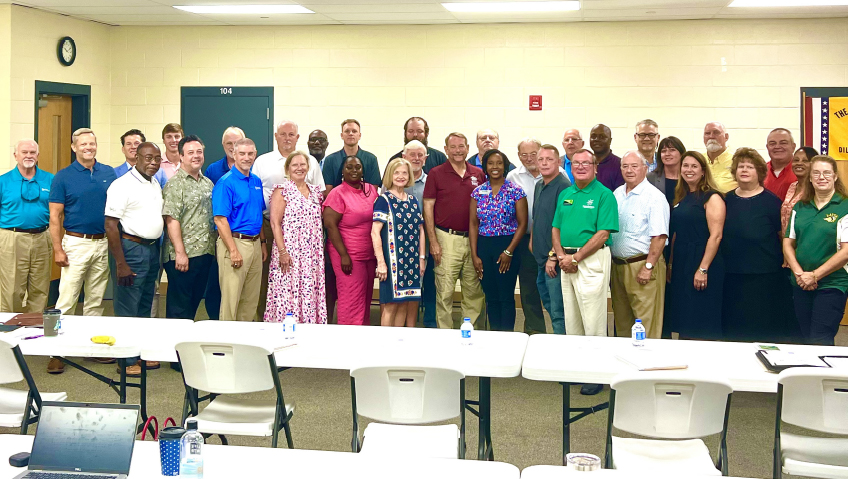
A “very impressive” board of local stakeholders—comprising bankers, utility companies, local co-ops, Duke Energy, Dominion Gas, the Water and Sewer Authority, those in the education field, and local colleges—meets monthly at the Inland Port Dillon to dictate the vision and the curriculum for Dillon Economic Development.
“We thought this would be a wonderful opportunity to educate our locals in economic development,” Berry says. This led to the advent of the Ambassador Program, created to educate a core group of citizens to serve as county ambassadors and speak about the benefits of doing business in the county via a series of monthly informational and educational presentations from leaders in business, education, and public service.
“The course presenters comprised experts from the South Carolina Department of Commerce, the local Pee Dee Regional Council of Governments, our utility partners, railroads, the ports and airports. They each spoke, and it allowed our attendees to learn the process of recruiting industry and all that it takes.”
Additionally, the DCP3 hosts the Bolts, Screws, and Fork Lunch Series featuring local entrepreneurs who share their knowledge and wisdom. “The only time residents see economic development is when you make an announcement, so we want to show people that we’re constantly working, bolts and screws are turning, to be competitive here in Dillon County,” says Berry.
The first lunch featured Tim Norwood, “recognized as the most successful entrepreneur in the general region.” Hailing from neighboring Florence County, Norwood is largely responsible for revamping the downtown, receiving many municipal association awards along the way. That was followed by the new president of Northeastern Technical College, Dr. Melissa Frank-Alston—the first female president in the history of the college—while the third guest was Micah Mallace, the new CEO of the South Carolina Ports Authority (SC Ports), probably the biggest economic driver in the entire state, Berry adds. “We sit down on the stage and I do an informal interview, allowing our local stakeholders to see all that’s involved in getting economic development moving.”
Industry appreciation is taken seriously in the county, Berry stresses. “To that end, an industry appreciation event was held at all of our major industries, organized by the DCP3 Economic Development Board. Free cups of Mike’s Italian Ices were given to all the employees during their schedule breaks. North of 3,000 employees were served.
“Harbor Freight is a large user of the port. Everything we do here now, after announcing the port about eight years ago, surrounds the port,” says Berry. “The port is our competitive advantage. Harbor Freight was truly the reason why the port’s here, because it was an anchor tenant that could ensure high-volume container moves.”
Other notable quality industries in Dillon County’s impressive stable of businesses are Wyman-Gordon; Perdue Chicken, one of the largest chicken producers in the world; and Arclin Group, which enjoyed a large expansion last year, and Elite Quartz. “We’re really fortunate and proud to have these fine industries here,” says Berry.
Manufacturers, distributors, importers, and exporters have also been invited by Inland Port Greer and Inland Port Dillon to take advantage of the benefits of connecting with the Port of Charleston, one of the biggest and busiest deepwater ports in the United States, which is serviced by roughly 12 ocean carriers. The Port of Charleston, which unloads products from all over the world and can carry them directly to Dillon via CSX’s Class 1 Rail, is a major economic generator in South Carolina. Goods can also be transported across the nation by train; alternatively, anything can be exported, including state-grown cereals and soybeans as well as manufactured goods.
Certainly, the inland port has given the region a competitive edge, and trade has grown yearly as a result of the substantial freight savings associated with rail—between 10 and 35 percent—compared to the cost of transportation by truck. Furthermore, SC Ports’ matchback program in Dillon expedites the process by matching exporters with vacant containers, ensuring that the cargo is ready for ship loading when it leaves Dillon via rail for the Port of Charleston.
Amidst all this success, Berry is actively looking to bring more businesses and manufacturers to the area. “We’re pretty active in our recruiting efforts, working with the Department of Commerce and a local group called NESA, the North Eastern Strategic Alliance. Their economic development entity is composed of eight counties, which we all fund, and they actively recruit and help us get prospects here in the county,” he shares.
In addition, “We’re always aiming to improve our infrastructure because it has to be present to get them here,” he says. This includes improving wastewater infrastructure for Perdue in an effort to remain competitive and to potentially receive another large food processor. “You’ve got to have the infrastructure in place. If you don’t have it currently available, there are just too many options for these prospects to locate elsewhere. We never want to have an industry come here and say, ‘You can’t handle our production.’ We’re always keenly aware of that and trying to improve our capacity, be it wastewater, electricity, or gas.”
Clearly, having an inland port is not the only incentive to establish or expand a business in Dillon County. South Carolina has a particularly strong business position; the county can attract investors by utilizing the statewide incentives and subsidies available to businesses, contingent on the size of the investment and the number of employees. Within 60 miles of the geographic center of Dillon County, employers have access to about a million workers. They can also offer the incentive of adopting a more relaxed, rural lifestyle combined with more active, exciting opportunities just two hours away in Myrtle Beach and metropolitan facilities a short drive away in Fayetteville, North Carolina.
“When people move here, especially from up north, they feel by way of proximity that they’re at the beach, because we’re only an hour away from Myrtle Beach,” Berry says. “People like the climate. They love having access to various amenities but treasure living in a smaller setting where their families can be raised in a wholesome environment. We’re a little bit slower-paced, and we still have an attractive, cherished rural environment.
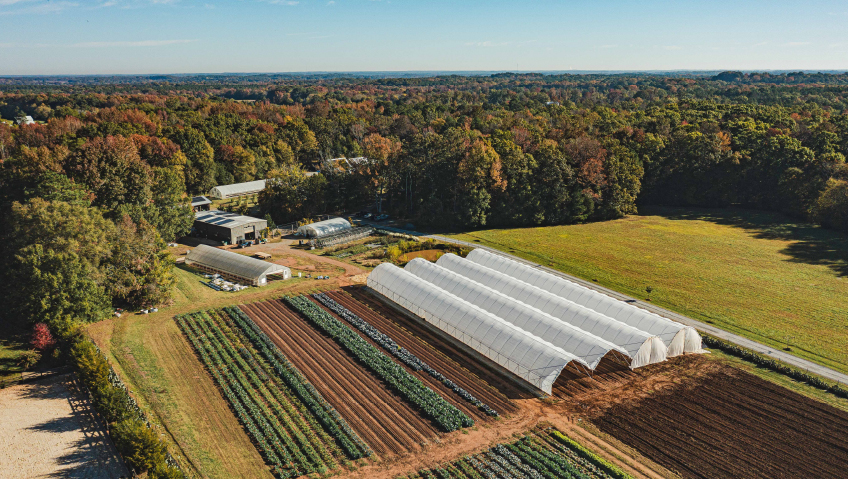
In addition, Dillon County has some of the lowest living expenses of any county in the nation—much lower than the national average—as well as a rich Southern culture and heritage and appealing jobs in growing industries. A 200-year-old operational farm, the Dillon County Theater, one of the few remaining examples of Spanish Colonial architecture in the country, and several homes and buildings on the National Register of Historic Places are just a few examples of the area’s abundance of art, history, crafts, and culture.
The Ellis Performing Arts Center, which can accommodate more than 450 people and hosts a variety of cultural events, is another example of Dillon County’s dedication to the arts, with a small group of performers known as the Macarthur Avenue Players presenting a variety of plays at the Dillon County Theater each year. The Dillon County Wellness Center’s 40,000-square-foot indoor sports and fitness complex offers a gym and walking track, and the $4.1 million arena hosts business meetings, banquets, competitions, and receptions.
Additionally, Berry has experienced another unique advantage to the area he knows well. “I ran a congressional office for 10 years, and we were responsible for eight counties. I don’t know where I’ve ever seen a county and a city—and we have three municipalities within our county—where municipalities work in unison the way I’ve seen here,” he says.
“We’re all on the same page, and there’s no bickering and fighting. We all see the agenda and we all work toward it. All the mayors and the county administrator, the city and county councilors—it’s really a beautiful thing and a little unusual to be a part of. It’s something that makes everything run more smoothly and gets everyone’s goals met as well.”