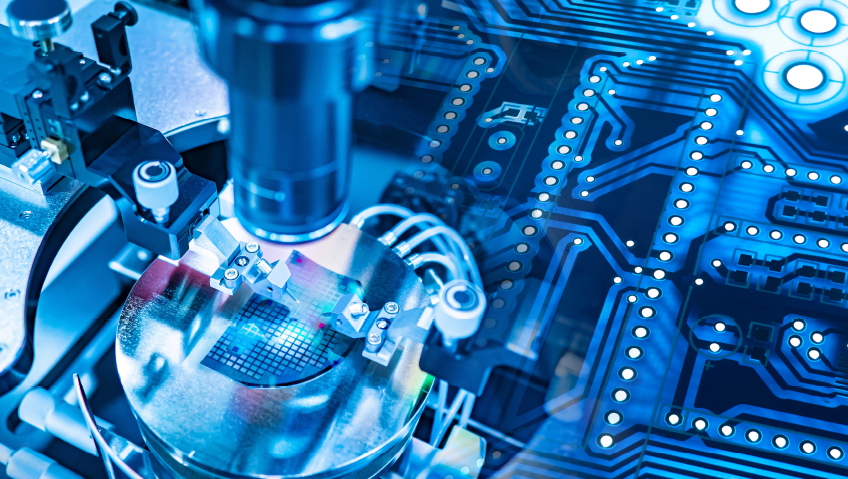
The Internet of Things (IoT) continues to revolutionize manufacturing, and global industry at large, with every new iteration. The term refers to how today’s physical technology is interconnected through digital means, allowing different systems to interface with each other and create an increasingly seamless environment for information retrieval, education, and communication. In the world of manufacturing, IoT is ever-present in many processes, as well as in a new technology that has fast become one of the most interesting industry innovations: the digital twin.
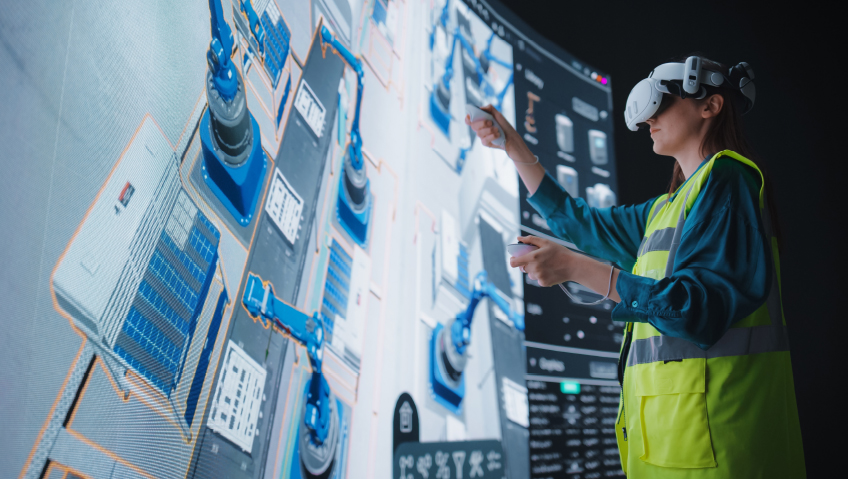
A digital twin is a virtual replica or representation of a physically existing product, system, or process. Its main function is to synchronize directly with the physical object through the use of real-time data (powered through IoT-enabled devices) and provide a more up-to-date status on it than a mere simulation. A digital twin can be defined under three sub-types: digital twin prototype (DTP), the various designs and processes that make up the physical product; digital twin instance (DTI), a digital replica for each instance of the finally-realized product; and digital twin aggregate (DTA), the collection of DTIs that can be used to further investigate information about the physical product.
Digital twin technology has roots that go all the way back to NASA’s Apollo program in the 1960s, when unprecedented incidents like that involving Apollo 13 necessitated up-to-date information on its various systems. The term “digital twin” was originated by NASA in 2010, although the concept slowly gained recognition and usage in the decades following the 1960s. The idea as it is understood today came to life in 2002, thanks to Dr. Michael Grieves at the University of Michigan who brought what would become the modern concept into public understanding.
Today, an idea decades in the making is fast becoming a new industry hot button. In a piece for IBM, Nick Gallagher says that digital twins are now seeing widespread industry adoption: “Roughly 75 percent of businesses employ [digital twins] in some capacity.” Furthermore, 92 percent of companies that use digital twins report returns above 10 percent, and over half report at least a 20 percent investment return, says Gallagher.
In the last two decades, the manufacturing industry began to extend the digital twin concept to fit the entirety of its processes. Today, digital twins can be used for the benefit of processes like inventory management, lean manufacturing, crash avoidance, preventative maintenance, and more.
Let’s take a closer look at some of the ways digital twin technology can excel in manufacturing companies, starting with predictive maintenance. Most digital twin systems offer as close to a real-time representation of a product as possible, which can go far in determining if any piece of a product is under-performing or in need of replacement. A blog post for Visual Components says that digital twins are a further extension of virtual commissioning, a process that allows manufacturers to catch issues before they become problems. “With a digital twin, virtual commissioning becomes an ongoing process rather than a one-time test,” the post says, because of its ability to allow for real-time monitoring, further enhancing the ability to anticipate and fix issues before they happen.
The benefits of digital twins for manufacturing do not stop there. According to a blog post for dataPARC, using a digital twin to take a proactive approach to product maintenance can not only reduce costs by avoiding repairs but also extend the usage of a piece of equipment, fine-tuning it for optimal performance. “Manufacturers can simulate different scenarios to identify the most efficient operational parameters,” says the post, which can lead to savings on energy and physical usage, and improvement in product quality.
Innovations like the digital twin can be used in tandem with workers to help them also become more effective. A digital twin can be used for training purposes, allowing newer employees to explore a product or aspect of a manufacturer’s business, even testing worst-case scenarios to better understand how to react to them. digitalParc also says that a manufacturer that spends money on a digital twin for its workplace can potentially even use the inclusion to market itself to prospective workers and to the general public, showing that it is firmly on the leading edge of current technology and willing to stand out in a crowded market.
There also seems to be a bright future when it comes to future iteration on digital twins. The Visual Components piece says that future trends will likely further incorporate AI systems in more robust ways, which will enhance its innate abilities to predict, fix, and monitor. AI models have the potential to increase optimization and productivity, thereby reducing waste and effectively meeting demand. Eventually, manufacturers may see the opportunity for digital twins of an entire factory layout, as well as further opportunities for more environmentally sustainable options available within the system.
Digital twin technology is fast becoming more accessible to smaller-to-medium-sized manufacturers and can indeed offer a lot of advantages to them, but as with most new technology, it’s an investment that should be entered into with as much information as possible. Digital twin implementation can cost anywhere from $10,000 to as much as several million dollars, depending on the size of the investment; typically, a standard investment will cost closer to the former figure. Many companies using the technology today (i.e. Siemens, Airbus, Tesla) report or suggest attractive ROIs after implementing the systems at various sizes and styles of onboarding.
The key for any company (but especially smaller-sized ones) considering adding a digital twin to its roster is to have a plan for it. In a piece for Acuvate, Gina Shaw suggests a few best practices for companies looking to invest in digital twin technology. These points boil down to clarity of purpose within the organization, as in what a digital twin will be used for and why, as well as choosing a scalable model that can grow with the firm’s goals. The volume of data to build an effective digital twin will be considerable, so utilizing machine learning and using relevant data sources is a must. “Clear goals will guide every aspect of your implementation,” says Shaw.
There is trepidation in some circles about the ability of new machines, especially those driven or enhanced by AI and machine learning, to supersede humans in the workplace. However, in the aforementioned examples, digital twins are only as useful as the human operators interfacing with them, meaning that human expertise is still the X-factor when it comes to making the technology ultimately useful. Unlike other kinds of new technology that might aim to improve on human effort in manufacturing, a digital twin is one that works hand-in-hand with human consideration.
More than ever, manufacturers are having to do a lot more work to stay ahead of the curve in the current business landscape. Digital twin technology is a part of an ongoing rise in bleeding-edge technological advancements and should not be taken lightly, both in its benefits and potential costs or challenges for a company. However, with thoughtful implementation and a willingness to learn, manufacturers could find themselves with an incredibly effective tool in the toolkit to optimize operations and make tomorrow’s products that much better.