As manufacturers reshore operations to North America, the entire region is automating on a historic scale. Now, more than ever, quality design and components are essential in fabrication. However, producing quality products calls for comprehensive assembly solutions.
In the world of original equipment manufacturing (OEM), effectively managing fastening complexities and assembly variability is crucial to preventing costly bottlenecks while safeguarding return on investment (ROI). Bossard Americas addresses these challenges and more.
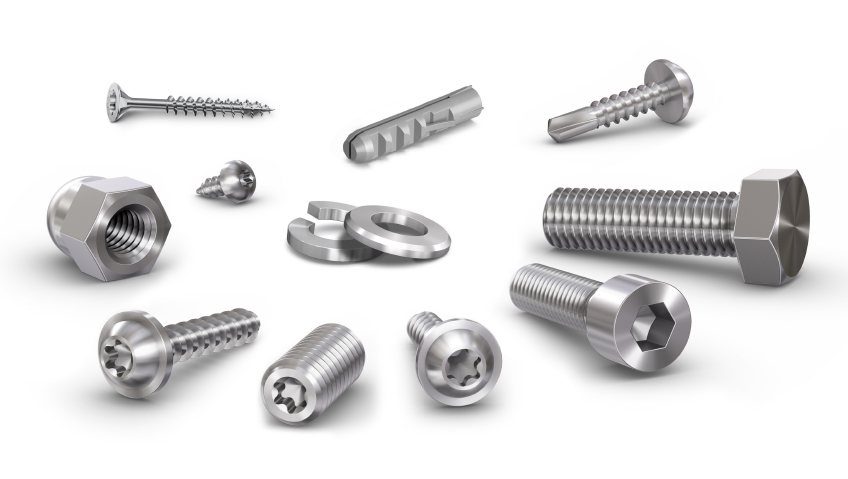
With a selection of over 1 million rivets, nuts, bolts, and other fasteners, Bossard Americas is a trusted fastening hardware distributor providing innovative, value-added services that extend far beyond basic fastening. With nearly two centuries in the industry, this formidable thought leader delivers layers of value that make its assembly solutions portfolio exceptionally robust.
Ultimately, Bossard Americas restores the definition of ROI to its rightful place. As every OEM knows, resolving bottlenecks leads to long-term project success and improved bottom lines. To this end, the company provides turnkey engineering integration, fastener fabrication, smart factory assembly, testing, and AI-assisted inventory management through smart factory logistics. It is trusted by some of the world’s best-known OEMs and pre- and sub-assembly suppliers of all sizes to optimize their assembly strategies with expert engineering and forward-thinking technology.
Established in 1831 in Zug, Switzerland by founder Franz Kaspar Bossard-Kolin and his family, the once-small hardware store has grown into a multinational company with impressive reach. While the parent company remains headquartered in Zug, Bossard Americas is based in Cedar Falls, Iowa. A collective team of almost 3,000 employees serves customers in 35 countries around the world.
The myriad assembly challenges OEMs can face make working with Bossard an obvious choice: high-speed fabrication comes with unplanned assembly risks; lightweight materials present fastening difficulties; torque variability causes rework; joint design failures demand downtime; inventory deficits slow down fabrication, and, perhaps most critically, workforce issues lead to process inconsistencies. As a powerful industry partner that works to address all these challenges, staying at the cutting edge is essential, so Bossard’s service technicians provide onsite support during onboarding, ensuring processes are set up for optimal success.
Committed to remaining abreast of technology in its field, Bossard Americas continuously invests in the latest automation systems available, passing on the benefits to its customers. “Everything we do is geared toward launching our customers and partners on the right foot with proper engineering, making sure their designs are optimized and that their material flow processes really work to make them as productive as possible,” explains Keri Miller, Director of Marketing.
One of Bossard’s most popular offerings, an inventory management system called Smart Factory Logistics (SFL), has been part of the company’s portfolio for a quarter of a century. Beyond inventory management containers, such as IoT-enabled SmartBins, SFL also provides advanced predictive AI capabilities. This involves collecting detailed information on customer consumption, logistics, and supply chain landscapes. Once the team has a firm grasp of these foundational details within a customer’s facility, systems can be automated to maintain stock levels perpetually with minimal human intervention. This reduces administrative burden for teams, as the sophistication of the product frees them up on multiple levels to focus on crucial customer-facing tasks.
Moreover, this system can now be integrated into Bossard’s Smart Factory Assembly (SFA) solution. Developed in response to ongoing industry labor challenges, this solution aims to provide a fast and efficient automated guide for new employees with little to no assembly experience. By offering simple, clear, digitized work instructions, it enables virtually anyone to build an assembly to exacting standards, making process replication straightforward. Consequently, digitization enables easy and accurate monitoring of material handling processes and system performance while simplifying the management of assemblies across different product ranges. This speeds up worker changeovers, provides clear labor support, and minimizes defect rates.
The solution is also fully compatible with a range of add-on systems such as robotics, drills, and camera systems, all focused on improving and maintaining quality standards while tracing all processes and providing the hard data needed to substantiate claims. Quality reports can be integrated into customers’ ERP systems, significantly minimizing reruns due to defects. Data provides vital metrics regarding improved efficiency, quantity surveying, labor time invested, and more.
“Not only are we providing the foundational process for the assembly—the elements that tie it all together—but we’re digitizing and connecting that process all the way through to the end, so every step is guided, traceable, and consistent,” says Miller.
To further ensure optimal outcomes on every project, onboarding clients is a thorough process. First, new facilities are carefully studied. Necessary elements, such as additional tools and workbenches with optional weight-managed scales, are provided to fully support the assembly process. This is followed by an integration process in which the Bossard team arrives on-site to provide customer teams with essential software training for complete control over all processes, including assembly programming. This gives end-users carte blanche over their systems, allowing them to set up any number of product lines based on their requirements and resources.
“We can provide a total solution as far as end-to-end service on assemblies goes,” says Steve Prostinak, New Business Development Manager.
Moreover, when the Bossard team is engaged early on in a project, its engineering team can ensure that every aspect of the product design is equipped with the correct fasteners for peak performance, longevity, and overall cost efficiency. “Depending on the level of automation, having the correct fastener for the job can be a real time-saver,” Prostinak advises. Considering redesign costs, involving the firm early in the development phase just makes good sense.
“Get us involved early so we can help you with the design, ensuring that you’re using the right components from the start,” says Doug Jones, Applications Engineering Manager. The company also assists with establishing optimal assembly strategies, including minimizing vibration issues and optimizing the torque used to fasten hardware. It also provides training, help with managing bills of materials, and more.
Looking forward to attending Automate 2026 in Chicago this year, the team anticipates meeting companies aiming to advance the technological aspects of their assembly lines, especially those looking to start small and scale as production grows alongside systems like SFA. “SFA enables you not to have to spend millions of dollars updating your factory floor and all of the hardware that goes along with it. It’s something that can be very easily integrated into your current workflow,” Miller says.
Beyond cost, the logic of such investments remains crystal clear: by leveraging Bossard’s full-service offering, OEMs can significantly improve their system reliability and bottom lines. To this end, Bossard Americas emphasizes the importance of incremental progress and enhancement. With assembly flow optimization at the core, partner customers would be hard-pressed to find a team better aligned with this mission than Bossard. By remaining relevant to their customers’ success, the company’s reach is growing steadily.
As most OEMs start to view assembly as a strategic discipline in response to speed becoming a growing factor in supply chain reliability, companies that recognize the cost of process variability in high-speed automation—caused by operator inefficiencies, supplier fragmentation, and inventory complexities—and choose to address the issue with such a complete solution set themselves on a new trajectory. Ultimately, assembly efficiency drives automation ROI, and achieving this requires expert engineering, advanced digital resources, and optimized logistics integration. Bossard Americas provides this sophistication and more.