Regarded as a pioneer and a green leader in providing wooden pallets and crates for a variety of shipping needs, CPS Wood Products serves both Canada and the United States, producing high-quality goods at reasonable costs. To maintain its market dominance ahead of smaller rivals, CPS invests millions in specialized machinery for quality goods, cutting-edge services, and affordable prices, all of which have contributed to the company’s continued success.
Sustainability remains at the forefront of its daily operations. “Wood is the only significant construction material that is both natural and renewable,” says CEO Shawn Hicks, who, with partner COO Dan Dunkley, strives to ensure the company’s green message is upheld throughout all of its operations. “Our business can demonstrate the chain of custody from forest to customer, and our main suppliers hold certification from the FSC,” he says.
Buying from FSC-certified forests that use the world’s best management practices allows for the protection of wildlife while ensuring reforestation of the land after harvest to help supply lumber for generations to come.
“Trees and lumber utilization are a huge part of the carbon cycle story,” Hicks tells us. “CPS buys salvaged lumber from the lumber mills—essentially leftover materials from the construction industry. We cut out the bad portions, areas where the lumber didn’t make construction grade, and upgrade the rest in shorter lengths to make our customer quality products.” CPS then shreds the waste and sells it to the farming community for animal bedding, and in turn, the chicken farmers sell their waste to mushroom farms to fully ensure the utilization of the lowest quality of lumber from the sawmills.
As for the company’s pallets and crates, they yield a net 1.1 pounds of carbon trapped per board foot of lumber sold up to 1,000 miles from its factories.
“We have the greenest packaging product available, and we fully utilize every piece of material,” explains Hicks. “For our waste outside of lumber, we send near zero waste to landfill—one 40-yard bin per month.”
CPS also prides itself on its excellent relationships, both with its 500 employees and its numerous clients, who are treated like members of the CPS family and viewed as partners. “One of the cornerstones of CPS is our vendors,” Hicks stresses. “We couldn’t do what we do without them. For 40 years, the key area of our success has been taking care of suppliers well.”
This means paying on time, taking discounts if offered, and ensuring the company is the lumber mills’ first choice to sell to. Rail siding is key here, as CPS can accept lumber directly from the mill to its yards in both Cobourg and Martin, Tennessee. Boasting industrial-grade materials, CPS is the only customer of most mills with direct access to receive lumber by rail. “We work very hard to be the first-choice customer for our supply base,” Hicks says.
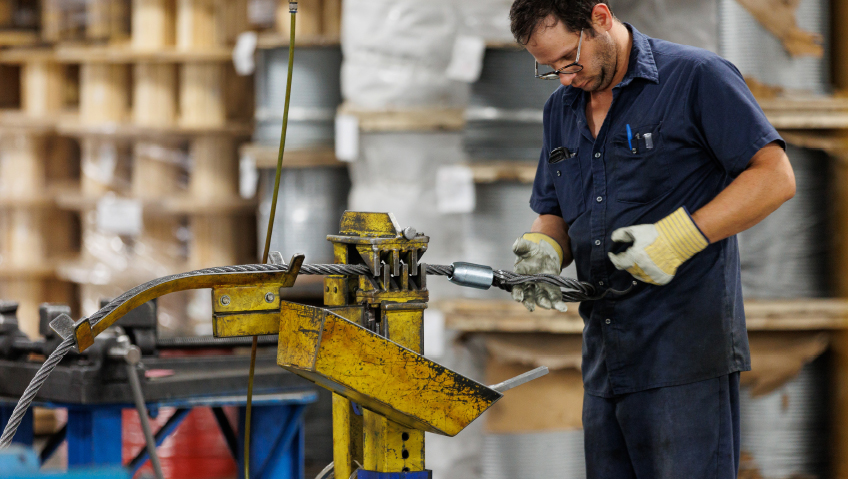
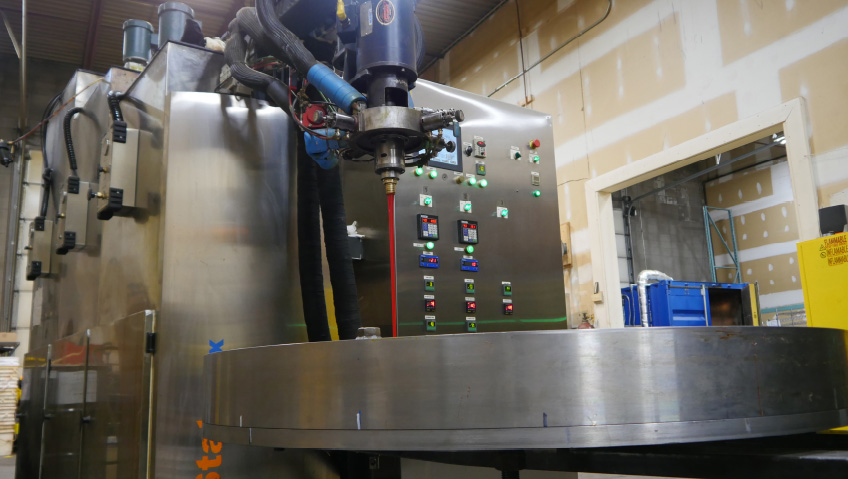
Another vital aspect of the company’s ongoing success is its dedication to automated operations, with its cut line being state-of-the-art and a key differentiator between CPS and its competition, resulting in the lowest cost of material ready for final assembly. “Our ongoing investment includes a $3 million assembly machine due to arrive in June of this year,” adds Hicks.
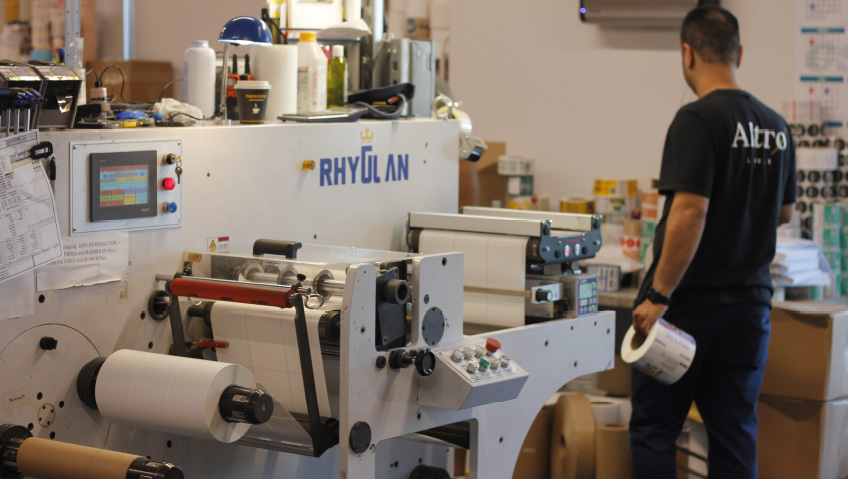
Utilizing new technology such as machine/robotic pallet assembly lines and high-volume output using industrial-grade automation—alongside new staff working on AI adaptation and implementation in the office and on the production floor—results in standardized quality across pallet and crate construction, and ensures CPS’s position at the top of the industry.
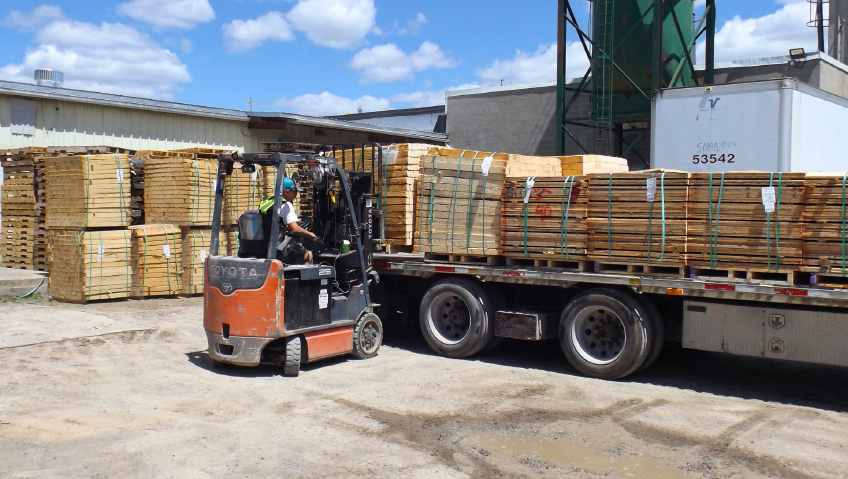
Sustainability also means addressing the company’s own carbon footprint. “Due to the cost of electricity in Ontario for many years now, our procurement team is always looking for ways to reduce energy costs across all locations,” says Hicks. “Our forklifts have been converted from propane to electric on 75 percent of our fleet, along with a 1.305 GWH annual solar panel system installed in Cobourg.” Renovations of CPS offices have also allowed the company to upgrade to efficient heat pumps as well as improved Insulation R-values, he adds.
This ongoing commitment to environmentalism and sustainability stems from an understanding of environmental, social, and corporate governance (ESG), a strategic framework for identifying, evaluating, and addressing organizational goals and activities, a company’s carbon footprint and sustainability commitment, workplace culture, diversity and inclusion commitment, and overall ethos regarding corporate risks and practices. This organizational concept has grown in significance, particularly for socially conscious investors who wish to put money into businesses that share these same values.
The three main pillars of ESG include environmental commitment, which covers all aspects of a business’s dedication to sustainability and its effects on the environment, such as waste, energy use, carbon emissions and footprint, and environmental responsibility; social commitment, meaning the internal working culture of an organization, employee retention, diversity, satisfaction, and health and safety; and corporate governance, which includes compliance, internal corporate culture, pay ratios, business ethos, and leadership responsibility and openness as part of a corporation’s commitment to corporate governance. Companies acknowledging a dedication to justice and equality in the workplace and the ability to adapt to changing laws and regulations are always of interest to investors, according to CIO.com.
As the effects of climate change worsen, companies’ environmental initiatives will only become more crucial, and it is anticipated that businesses that use resources such as water, coal, oil, and power more wisely will do better in the future when those resources become scarce in some places. Additionally, a firm dedication to appropriate governance and compliance will be essential for maintaining a business’s operations as more rules and regulations pertaining to technology, most notably General Data Protection Regulation (GDPR), come into effect.
CPS’s commitment to sustainability and forest stewardship (the company also offers pallet recycle programs and repair programs) are just a few aspects that help set it apart, along with its rail siding on site, which lowers the cost of inbound materials, and state-of-the-art operations that allow staff to fully cut, resaw, notch, and stack over a railcar of lumber per shift.
“Our assembly lines are the best in the world and procured from all over the world,” adds Hicks. “This results in customers placing an order and then not worrying about it because we deliver on time, every time, at a consistent quality that our customers expect.”
Recent challenges for the company have included lumber and duty prices, which are “very much” top of mind in all of the lumber industry right now; duties and tariffs went up to 45 percent last August, and at the time, lumber costs in the U.S. were very low. “It was an easy pivot to just buy U.S. material in the U.S. and Canadian material in Canada,” Hicks shares. “At the moment, the U.S. material costs are rising so fast that they’re ahead of the cost of the Canadian material, and it’s causing a lot of pivots.”
The marketplace in general is being heavily impacted by tariffs, but CPS has operations and assets on both sides of the border, providing the company with a buffer that helps protect its clients as well, remaining “very well equipped” to supply customers regardless of tariffs.
Looking forward, CPS’s commitment to the utilization of all materials will remain at the forefront. “We’re literally selling $50,000 a month in animal bedding waste, where many companies are just giving that away or paying to get rid of it,” Hicks explains. “We have an asset there that we’re utilizing, but it’s really just the automation. The railcar access and the automation give us the lowest cost of material ready for assembly versus every competitor in North America. That puts our customers in a good position from a cost perspective, but also puts us in a pole position on being able to compete.”
In terms of retaining customers, CPS offers several customized programs, such as looking at clients’ schedules and plans and supplying their needs proactively. “For our largest two customers, we operate in a replenishment of inventory scenario, not a purchase order. Traditionally, they look at what they need and place an order,” Hicks says. “We go outside the box on that one, and we take care of them. Sometimes they don’t know how we know their demand so well.”
This level of quality of care is absolutely a priority for the company, Hicks stresses, along with embracing growth and maintaining a true devotion to sustainability. “We have always been committed to [sustainability] and will continue to further reduce our carbon footprint and greenhouse gas emissions,” he assures, whether that’s zero waste to landfill or maintaining an ethical supply chain through forest stewardship.
Social factors for CPS will focus on its workplace culture, diversity, community engagement, and human rights, as well as fostering a collective experience to keep longstanding employees satisfied and foster employee development.
Whether it’s supporting community service and philanthropy or assisting customers with a wide range of issues and logistics that need solving to keep their business running smoothly, CPS’s longstanding experience, knowledge, and skill can handle it all, Hicks says.
“We find an issue that needs solving, and we solve it.”