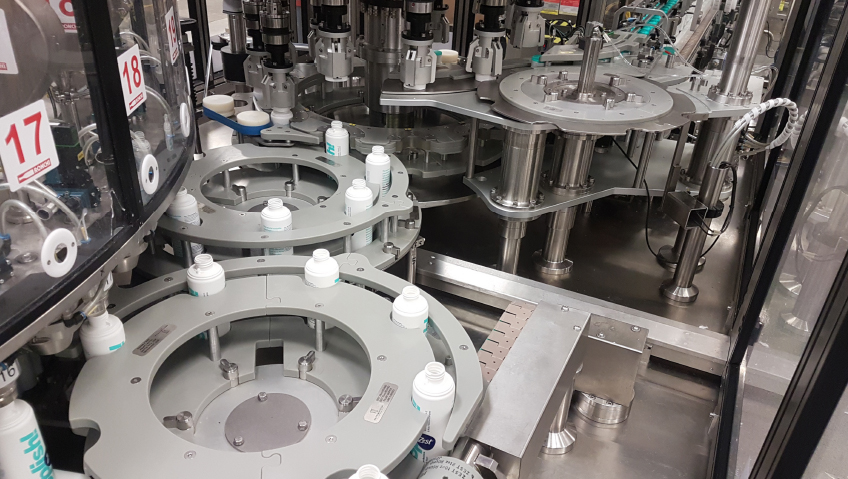
Established in Waterloo, Ontario in 1993, Septimatech (Sept-Team-a-Tek) helps manufacturers improve packaging line performance through practical, application-driven container-handling and changeover solutions. Working as an engineered-to-order partner, the company combines design and manufacturing expertise with 3D scanning, CNC manufacturing, and a full-service field installation team to deliver reliable outcomes.
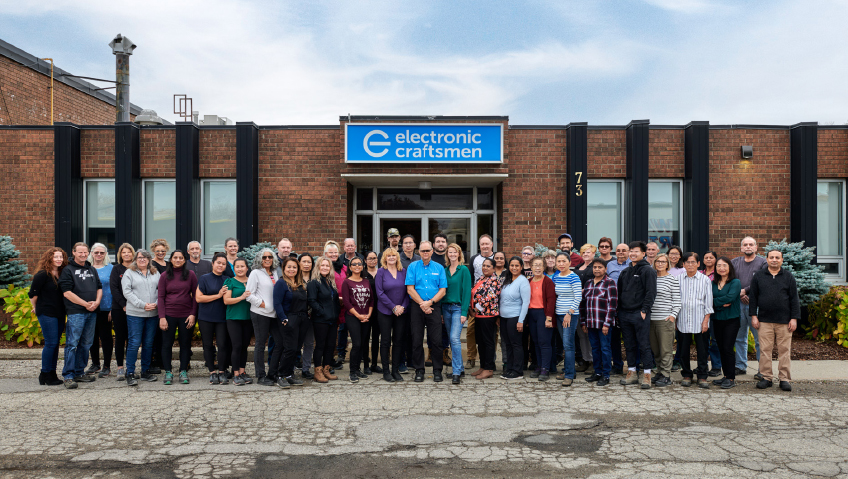
Septimatech’s workplace culture shapes how teams collaborate with one another and with customers, ensuring technical capability is matched by strong relationships and consistent execution.
“Customer challenges are our challenges as well,” says Blain Parkinson, Septimatech Group’s Sales Leader. “Our customers operate in fast-paced manufacturing environments where downtime is costly and consistency and reliability are critical.”
These challenges include tight delivery schedules, evolving product requirements, dynamic production environments, time pressures, skilled labour shortages, and the need for Septimatech’s equipment to integrate seamlessly with customer equipment. The company addresses them by utilizing its longstanding partnerships, taking a solutions-based approach, and working closely with customers early in the process to fully understand their applications, constraints, and long-term goals.
“We’re an engineering company, so we have to understand what their challenges are and then provide that need-based solution for them,” Parkinson emphasizes.
Indeed, this is a company that prides itself on always putting customers first, and this is enhanced by its investment in its team through fostering a culture of collaboration, communication, and continuous growth. “Our investment in our people is anchored in two complementary terms that are becoming cultural pillars: One Team and One Legacy,” says COO Eric Murray. “Together, they provide clarity around both how we work together and how each person contributes.”
One Team defines the shared commitment to act in the best interests of the company and its customers, above individual priorities and individual departments, a mindset reinforced through the One Team Leadership Team, which meets regularly to focus on leadership behaviours, tools, open communication, and alignment.
“We strongly believe that investing in our people directly impacts the value we deliver to customers,” Parkinson says. “We foster a culture built on collaboration, open communication, and continuous growth. Cross-functional teamwork between sales, engineering, and manufacturing ensures alignment and accountability at every stage of a project.”
Ongoing training, mentorship, and knowledge sharing are priorities, helping the team stay ahead of industry trends and emerging technologies. By empowering employees to contribute ideas and take ownership, Septimatech creates an environment where innovation thrives and customers benefit.
“These discussions centre on accountability, trust, empathy, respect, and psychological safety,” adds Murray. “They ensure we lead consistently, communicate openly, and support one another as a unified team. This alignment at the leadership level sets the tone for collaboration across the organization.”
One Legacy puts the responsibility back on each employee, building on the foundation created by Septimatech’s seven founders. In fact, Living the Legacy represents the seven values, principles, and beliefs that guide how employees show up every day, with each employee building their own legacy from their very first day at Septimatech.
To support both One Team and One Legacy, a shared Accountability Ladder gives teams a common language to hold themselves and each other accountable by clearly defining above-the-line and below-the-line behaviours to remove ambiguity around expectations and create a constructive way to address challenges.
These cultural investments have helped elevate how everyone works together, aligning behaviour, accountability, and purpose, and strengthening performance as One Team, while empowering individuals to build One Legacy that carries the company forward.
Embracing empathy, Murray adds, is another vital company component and begins with putting yourself in another person’s shoes. “Each of us manages pressures that others may not always see,” he says. “It’s about stepping into the perspective of sales, engineering, manufacturing, or finance and understanding the challenges they’re facing. When we look at situations from both sides, we make better decisions in the best interests of the One Team and of our customers overall. That mindset is one of my passions.”
On the manufacturing side, Septimatech has also worked to reduce its design and manufacturing times through value-added and automation enhancements. “We’ve been very deliberate on reducing design and manufacturing times,” Murray says. Using Value Stream Mapping, the company starts by mapping out the process end-to-end for a product, looking at the current state, design, manufacturing, materials, quality, and shipping. “That gives us a clear picture of where improvements can be made and allows us to define a future state.”
As part of that work, a significant portion of the company’s automation has been focused on improving the quality and reliability of engineering outputs by implementing automatic checks and structured design-release steps to ensure critical requirements aren’t missed. As an engineered-to-order company, every order is unique, but there are still common elements that lead to a successful, high-quality outcome. “Automation helps us consistently apply those proven elements while maintaining the flexibility that our customers require,” Murray explains.
Standardized design platforms, improved internal processes, and advanced testing capabilities have also helped accelerate development without compromising quality. “In manufacturing, automation enhancements and continuous process improvements have increased throughput, repeatability, and efficiency,” Parkinson adds. “These investments allow us to respond faster to customer demand while maintaining the high standards our customers expect.”
All of these improvements operate within a standard PDCA (Plan, Do, Check, Act) cycle. Plans are changed based on Value Stream Maps and implemented in a controlled way, and results are measured, adjusted, and then standardized. This continuous improvement loop affords reduced cycle times while steadily improving quality and predictability, resulting in better quality upfront, fewer iterations, and more reliable outcomes.
“We add value by taking the time to truly understand our customers’ pain points and then applying our expertise through the right product solutions,” says Murray. “By working closely with them early, we can tailor solutions to their specific application and constraints rather than offering a one-size-fits-all approach.” Consistency and reliability come from strong alignment and follow-through, he adds.
One of Septimatech’s biggest challenges recently has been operating in a more complex global environment, dealing with factors such as tariffs, evolving cross-border requirements, and rising costs that have added uncertainty for both customers and internal planning. “These pressures can create hesitation around project timing and investment decisions, particularly for engineered-to-order solutions where predictability matters,” Murray says.
Despite these challenges, the team has enjoyed strong order growth, expanded its customer base, and successfully delivered several large and complex projects. “These accomplishments are a direct result of our team’s adaptability, resilience, and commitment to customer success,” shares Parkinson.
Indeed, Septimatech has responded without disrupting customer operations by focusing on being proactive and working closely with customers to simplify complexity by supporting shipping documentation, customs requirements, and related paperwork. This approach has helped ensure smooth, predictable delivery and turnaround times, allowing customers to maintain momentum even in uncertain conditions.
“Internally, we’re also proud of the progress we’ve made in strengthening our capabilities,” Murray says, citing advancements in standard costing, pricing strategies, and continuous improvement initiatives that have reduced design and manufacturing times while delivering some of the strongest quality metrics in the company’s history. “We’ve introduced value-added product enhancements and thoughtfully applied automation to improve consistency, streamline processes, and elevate the customer experience.”
As for milestones, there are some clear similarities in how Septimatech thinks about the future and how it approaches a Value Stream Mapping exercise, starting by honestly evaluating its current state, then looking ahead to the vision of where it wants to be, and finally defining the steps required to move from one state to the next.
It’s an approach that carries directly into its annual business planning, where the company sets priorities, aligns the team, and turns longer-term vision into practical, achievable actions. By following the plan and taking deliberate steps forward, the company can make steady progress toward its goals rather than chasing short-term wins.
“For us, the focus is on continuous improvement from today’s reality toward tomorrow’s vision—measuring progress, adjusting when needed, and staying disciplined in execution,” Parkinson says.
That mindset keeps Septimatech aligned as One Team, ensuring the milestones pursued translate into meaningful, lasting improvements. “We don’t spend a lot of time focused on competitors,” Murray says, adding that Septimatech is very clear on who it is, the products it offers, and the value those products deliver. “Our success has been built on strong customer relationships and taking the time to truly listen and understand each customer’s specific application and challenges.”
That focus allows the company to apply its expertise in a way that’s practical and tailored, rather than forcing standard solutions where they don’t fit. “We believe that understanding the customer’s environment, constraints, and goals is the foundation of delivering reliable, high-quality outcomes. It is what we believe in, and it’s what has driven our success,” says Murray. By staying focused on customers, culture, and continually improving how it delivers value, the company has built long-term partnerships that matter, which remains a priority moving forward.
The future for Septimatech will bring expanded automation capabilities, further reductions in lead times, and deepening partnerships with key customers while also focusing on strategic planning for growth, such as investments in technology, talent development, and new market opportunities. In another move, the company also recently entered a new partnership with Magnetic Technologies Ltd., bringing advanced magnetic capping headsets to manufacturers seeking to maximize productivity and streamline changeover processes. “By integrating Magnetic Technologies’ industry-leading hysteresis capping headsets into our cap handling solutions, Septimatech has expanded its abilities to enable fast, accurate, and repeatable setups,” says the company. “These magnetic headsets are designed to be compatible and interchangeable with OEM cappers, ensuring seamless integration into existing production lines.”
“What truly differentiates us is our combination of technical expertise, customer-first mindset, and collaborative culture,” Parkinson says. “We don’t just supply equipment; we become a trusted partner. Our ability to listen, adapt, and deliver reliable, application-specific solutions consistently sets us apart from others in the industry.”
As Murray stresses, “Legacy isn’t something you only define years later looking back; it’s built every day through the choices we make, the standards we hold ourselves to, and how we support one another and our customers. Over time, it becomes something you can reflect on and be proud of, but it really starts on day one and grows each and every day.”