In the manufacturing world, ‘dark, dirty, and dangerous’ is being replaced with ‘dynamic, decent, and dependable’ as factories embrace Artificial Intelligence, robots, and cobots.
Compared to just a few years ago, Artificial Intelligence (AI), automation, and smart products have transformed how we live, work, interact with others, and even think. Voice-controlled virtual assistants like Alexa can do everything from turning on lights to changing the thermostat and even reading us an audiobook. Cumbersome paper maps are a thing of the past, as built-in GPS navigation systems in our vehicles tell us exactly where to drive, the best routes, and how long it will take. And instead of talking to a real person, online chatbots with friendly-looking avatars and names like ‘Anna’ or ‘Emma’ help us with everything from banking to scheduling dental appointments.
Just as AI and automation have become part of our everyday lives, so has technology become integral to modern manufacturing. From agricultural robots harvesting our food on Earth to autonomous vehicles like NASA’s Perseverance rover exploring Mars and collecting rock samples, robots and cobots—sensor-equipped robots operating safely around their human counterparts—and other automated solutions continue to proliferate.
Smarter manufacturing
For hundreds of years, especially since the Renaissance, humankind has invented increasingly complex machines, improving transportation, communication, printing, and manufacturing. The Industrial Revolution in Britain saw new production methods focusing on iron and steelmaking, steam engine production, and textiles. This led to new technologies worldwide, making manufacturing more efficient and less expensive, a shift that soon spread across Europe and North America. Goods once made in small workshops by hand were now manufactured by machines on a large scale in a factory system.
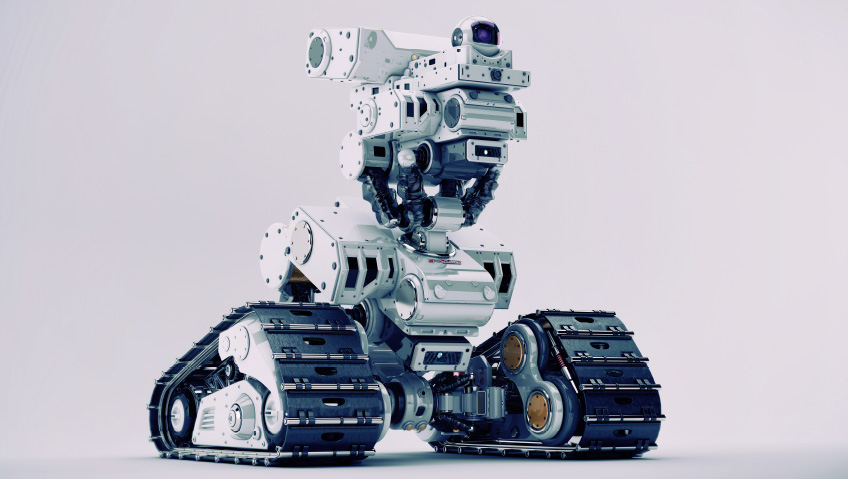
Today’s manufacturing combines time-tested production methods with AI, robots and cobots, and other automated solutions. Assembly lines no longer rely solely on human eyes to spot flaws, instead using high-speed cameras capable of scanning products in seconds. And repetitive tasks, like pick-and-place or lifting heavy items, are now performed by industrial robots.
To ensure machines work at peak performance, built-in predictive maintenance programs (PMPs) use sensors to check vibration, temperature, revolutions per minute (RPMs), and more in real time. If there is a risk of misalignment, unnecessary wear, or equipment overheating, data is sent to technicians immediately. This prevents issues like costly part replacements and unnecessary downtime, optimizing machine lifespan and improving operational efficiencies.
The role of Artificial Intelligence
Predictive maintenance, cameras, vibration and ultrasonic sensors, robots, cobots, self-driving forklifts, and other devices all need AI of some sort to function. While manufacturing machinery builds on past technologies, the key difference is today’s systems use AI to collect information, learn, adapt, and even make on-the-spot decisions, often without human interaction. Driven by technology, modern manufacturing aims to optimize processes and can even reduce production waste depending on material availability. Taken together, today’s factories are the result of smart manufacturing, also known as Industry 4.0: The Fourth Industrial Revolution.
Where Industry 1.0 and Industry 2.0 saw mass production transform because of steam and electricity, The Third Industrial Revolution truly transformed how goods are made. Also known as the Digital Revolution of the 1970s, Industry 3.0 ushered in computers, programmable logic controllers (PLCs), and microprocessors. These then-new technologies enabled manufacturers to shift from analog to digital, making production faster and more precise.
Now, virtually all aspects of the manufacturing process are undergoing major transformations thanks to AI and robotics. From material selection and handling to manufacturing, assembly, finishing, quality control and inspection, packaging, and even customer service, fewer tasks are being handled by people. While some argue this will result in job losses, others believe automation will benefit human workers. Instead of risking physical injury from lifting heavy materials or dealing with repetitive strain, robots, cobots, and automated overhead cranes will handle the load. This also has the benefit of making operations more streamlined and freeing up workers to handle other tasks.
Advantages of automation
For manufacturers, AI, robotic systems, and other automated processes often result in greater productivity, enhanced quality, lower operational costs, and other benefits. Thanks to sensors, software, cloud computing, and digital technologies, some manufacturing facilities are now fully autonomous. Unlike factories with humans working in shifts, these plants operate 24/7. Via the Internet of Things (IoT), machines, cameras, 3D printers, sensors, and other devices are all connected, and working in real time, machines make on-the-spot decisions about production times, speed, materials, and more. Also known as ‘lights-out,’ these factories utilize robotics and CNC machines, which can run without human attention. In some instances, workers are only present at the final stages to verify quality.
Like all manufacturing systems, there are pros and cons to autonomous factories, starting with cost. Investing in advanced robotics and IoT technology is an extremely expensive proposition, and the investment can take years to recoup. These facilities also need a clear path for the future, as robots and cobots will need to be modified and replaced over time.
Then there is job displacement, since fewer people are needed for repetitive tasks like assembly and packaging. While fewer human employees are required, companies will need to hire staffers with backgrounds in advanced engineering, robotics, AI, and maintenance, or upskill existing workers, requiring additional investment.
Then there are the many advances in autonomous manufacturing. Once up and running, labour costs are reduced since fewer humans are needed. For those who remain, especially on the factory floor performing quality assurance and other tasks, safety is enhanced. Repetitive tasks once performed by people are now handled entirely by machines equipped with safety sensors and cameras. If an obstacle is detected or someone gets too close, robotic arms and conveyors shut off, preventing injury.
One of the greatest, and sometimes overlooked, advantages of autonomous manufacturing is that these facilities keep jobs in the United States and Canada. Instead of making products offshore and facing issues like long shipping delays, tariffs, duties, and substandard quality, jobs stay in North America. For customers, this presents a huge benefit in the form of shortened lead times. Instead of waiting for orders to arrive, autonomous factories can provide greater output and higher consistency. And on the environmental side, machines connected to IoT systems are more efficient, producing less waste material.
Manufacturing has come a long way from the first Industrial Revolution of the mid-18th century, when men, women, and children took their lives in their hands working up to 16 hours a day in dimly lit, poorly ventilated factories alongside dangerous machines. Humans will remain integral to the manufacturing process in the future, but their roles will be very different from the ones they held in the past.