Backed by 50 years of experience, Ohio-based Quality Components Company (QCC) is a leader in its specialty—manufacturing, selling, and servicing torches, gas control and gas distribution systems, tips, cutting machines, and other related equipment.
Being smaller than many others in the industry puts QCC at a distinct advantage. Many of the dozen staff members at the company’s Mentor, Ohio, location are cross-trained, experts in essentially everything there is to know about the torch industry.
In 2024, the company welcomed new staff, which underscored the importance of workers learning as much about the sector as possible. “It’s really about making sure we are cross-trained,” says General Manager Josh Flagner. “Small companies tend to have one person who can do one thing and others who can do something else. As you get ready to skill for growth, increase revenue, and put together contracts for pieces of business, it becomes harmful to have person-specific jobs or tasks. So we are working very hard on cross-training.”
Within the industry, Flagner and Sales Engineering Manager Franklin Mayse often encounter representatives and salespeople from other, larger companies. These are friendly relationships but serve to remind Flagner and Mayse of the importance of knowing everything about torches, from what gloves to wear to the best torch for a specific task, as part of the team’s expertise is being able to work with local gas reps to solve customer problems.
Smart growth
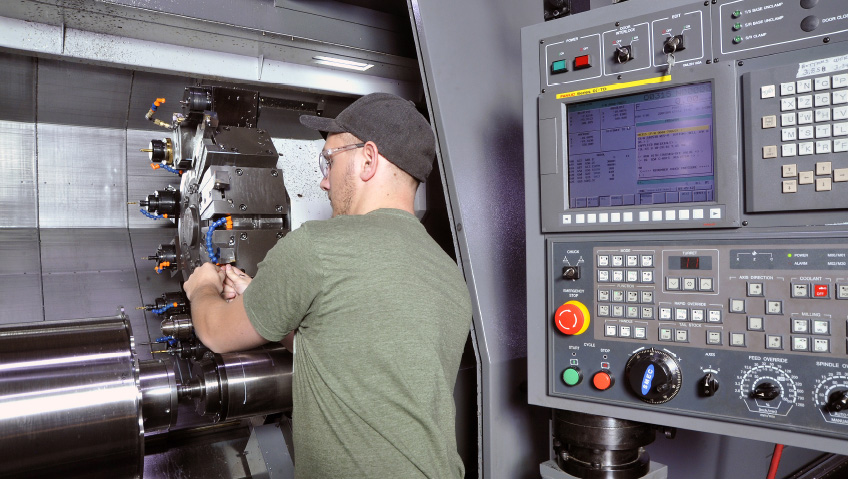
Growing at a measured pace, QCC acquired assets from a small machining company last fall, which were moved to its Mentor facility. This included a new CNC mill, measurement equipment, quality control inspection equipment, and some manual machines. This year, the company will invest in outside training at a machine shop to create in-house experts for its CNC machines, and it is currently upgrading its part cleaning line and procedure. The team will be able to offer Cleaned for Oxygen Service certification to customers.
Prioritizing environmental responsibility, QCC also recently purchased water tanks for its treatment system and is actively working on chemical mitigation with an outside firm to ensure nothing harmful goes down the drain. “We are having a company come and mitigate the chemicals once we are done, take it away, and make sure we are doing our part to conserve the local environment,” Flagner shares. QCC’s membership in ReMA, the Recycled Materials Association, and AIST, the Association for Iron & Steel Technology, speak to the company’s enduring focus on quality and sustainability.
Made in America
Unlike many of its competitors, Quality Components Company manufactures its products in America. Designed and built to last, the company’s products are widely used in scrap yards, foundries, steel mills, shipyards, railroads, and other industries for scrap cutting, fabrication, steel conditioning, and emergency purposes where quality, reliability, and durability are essential.
For the past several years, the team at QCC has been part of many conversations about offshoring, reshoring, and tariffs, with customers caring about “Made in America” more than ever. Although some competitors like to promote domestic manufacturing, the reality is that some of them offshore their manufacturing to Poland, Brazil, and other countries, or are owned by foreign multinationals.
When discussing QCC’s gas apparatus torch niche, Flagner says many others in the sector are sourcing foreign product and performing assembly work in the U.S. (or doing all of it overseas or in Mexico and importing and selling in the States). At present, there are only two domestically owned and domestically manufactured and sourced companies, with the majority doing their work overseas. QCC, conversely, is committed to making every effort to source as much of its material in America as possible. “For a small company like ours, a lot of the reason we do that is that it’s easier to communicate and control things with our vendors if they’re domestic.”
“There’s lots of lip service paid to domestic sourcing in our niche industry, but not a lot of action,” Flagner tells us. “What we’ve seen is a lot of talk about how much domestic sourcing matters and obviously, we’ve got DOD manufacturing that heavily wants to be domestic. There are all sorts of big contract and projects where it’s really important to be a domestic company.” Although QCC doesn’t sell directly to the Department of Defense (DOD), it has a series of products specifically designed for applications relevant to DOD activities, as DOD contractors come to QCC for products.
Continuous improvement
Ever since QCC was founded in 1975 as Quality Repair Company—a torch and repair shop for local steel mills—the company has dedicated itself to high-quality, timely customer service. Continuing to build on its expertise, the company began manufacturing its first torches in 1985 after identifying the best features and components in existence. And in 1999, after adding engineering and manufacturing to its roster, the business changed its name to Quality Components Company.
The years that followed saw QCC continue to develop, engineer, and build additional torch offerings, and simultaneously build its reputation. “In 2017, we designed our patented flowmeter and QC-series torch tips, and to this day, QCC is the only oxy-fuel equipment manufacturer capable of producing a torch that can cut non-ferrous material up to 60” thick,” states the company.
Today, QCC counts many scrap providers and scrap contractors among its customers. All of them provide steel to local mills, where the product goes straight out and comes right back so it can be remelted. Many mills have bought scrap companies to shorten the supply chain and are now vertically integrated.
At present, QCC has an approximate 40/60 split between direct customers and distributors, and about the same split between scrap yards and steel mills. “We have a heavy presence in a lot of mills in the Midwest, the East Coast, the South, and even Canada,” says Flagner. Although all areas of the business are growing, the company is seeing increased activity from scrap yards, many of them located nearby. The reasons are both environmental and cost-related; recycling is a multi-billion-dollar industry, and it makes sense for companies to keep it in-house.
“There is a huge push for saving money and saving energy because of the steel manufacturing process,” Flagner explains. “Old-fashioned blast furnaces use a ton of energy and make a lot of pollution. Recycling—if you can do electric arc furnace and melt the scrap down—saves a lot of energy.”
Looking ahead
By the end of 2026, Quality Components Company aims to expand the team with additional full-time staff, and Flagner and Mayse say there are plans in the works to increase the company’s volume, enabling the company to continue investing in equipment, developing its cleaning line, and expanding its offerings.
“We talk a lot about making torches, and we’re really great at that,” says Flagner. “However, we’re also great at making flowmeters, regulators, and gas apparatuses. We have gone into steel mills and created custom station drops, where we are regulating and metering oxygen and natural gas for their furnaces or their torch stations, or anything they need in those facilities.”
A hands-on company, QCC will create custom gas apparatus for efficiently moving gas around, ensuring the pressure, filtration, and regulation are all correct at torching stations. “We are going to provide you the knowledge, the expertise, and the service that goes along with making the best torch. We make a torch that’s durable, has the highest quality, and breaks less than other torches,” says Mayse.
“Everybody else is about customer service and salespeople, but not everybody else can get Frank on a plane to Alabama to figure out why you are having an issue in your melt shop and fix that issue,” says Flagner. “Our goal in 2026 is to make sure that when and where we go to market, we are not just a torch or regulator company, we are a problem solver. We are going to come out and help.”