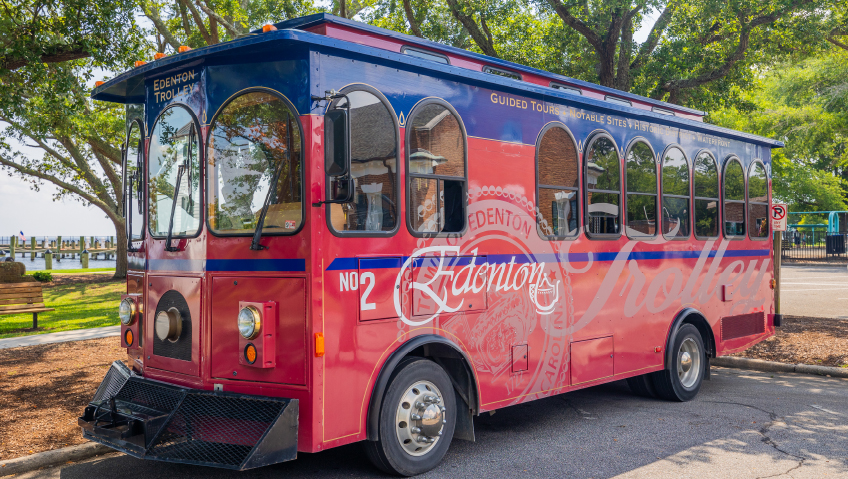
When it was founded in 1722, Edenton became a bustling hub for trade, culture, and politics. Today, over 300 years later, this charming North Carolina city remains a focal point for historic tourism, and is known nationwide for welcoming new residents and businesses. The county seat of Chowan County, Edenton’s population remains modest. With about 4,500 residents in the city, and some 15,000 in the county, Edenton and Chowan service roughly 22,000 residents per day.
The city is home to several important sites, including the historic Georgian Chowan County Courthouse, built in 1767; the Cupola House (built in 1756-1758, now a museum and one of the first preservation movements in North Carolina); St. Paul’s Church (built in 1760); and other notable buildings. Edenton’s downtown is recognized for its many businesses, including diverse retail options, restaurants, bars, and law offices serving not only the city, but Chowan County.
During Colonial times, Edenton was a well-protected port city and a key trade center for tobacco, timber, and other products, with over 350 merchant ships carrying goods annually. Other industries established themselves, especially agriculture, peanut farming, fishing, and cotton mills. Developed from 1899 to 1923, the Edenton Cotton Mill was an important employer.
“My mom actually worked there when she was pregnant with me in the ’90s,” says Executive Director of Main Street Edenton and Lead Economic Developer for Edenton Chowan Partnership (ECP), James ‘Ches’ Chesson, of the mill. Closed in 1995, the mill and its surrounding village, comprising 44 acres, were donated to Preservation North Carolina and underwent significant, thoughtful renovations with an eye toward primarily residential uses. “Through the use of PNC’s protective covenants, the neighborhood retains a high degree of its original architectural and landscape fabric today,” writes Preservation North Carolina. “The project demonstrated the incredible economic impact of community re-investment through historic preservation and the use of historic tax credits.”
“Historic Preservation is good for business in Edenton, and we are one of the highest per capita users of historic tax credits,” says Chesson. “Historic preservation and tourism are large parts of the modern economy, coupled with established industries who have made the decision to stay and grow in Edenton.”
Born and raised in Edenton, Chesson attended the Naval Academy to complete his undergraduate degree and then earned his MBA from the University of North Carolina at Chapel Hill’s Kenan-Flagler Business School. Serving as a Naval Aviator for 11 years, he returned to his hometown in 2023 following his service. Entering the economic development world, Chesson began working at Main Street Edenton. In late 2024, he expanded his role as Executive Director of Main Street Edenton and acts as the Lead Economic Developer for the Edenton Chowan Partnership.
“Business and government are intertwined, creating a dynamic public-private partnership that is growing the community and expanding our reach,” states the Edenton Chowan Partnership on its website, adding, “There’s a reason why so many people are flocking to Edenton and Chowan County.”
Businesses choose Edenton for its location, infrastructure, workforce, and quality of life. Edenton and Chowan County offer a combination of industrial sites, waterfront access, transportation assets, an established manufacturing base, and a quality of life that appeals to businesses looking to establish or expand their operations.
Mindful of its storied agricultural past—with landmark companies like peanut roaster Jimbo’s Jumbos/Hampton Farms—the area also welcomes other manufacturers and industries, many on Peanut Drive. The area’s first industrial zone boasts diversified businesses calling the site home. These include family-owned sport fishing boat maker Regulator Marine, Fortune 500 company Olam Edible Nuts, food safety and testing specialists JLA International, Inc., and the corporate offices of multi-million-dollar company Colony Tire.
Along with Peanut Drive, the area is home to the Northeastern Regional Airport and Industrial Park. A former WWII military airfield and now owned by the town, Phase 1 of the site is fully occupied. Phase 2, owned by the partnership, is marketed to recruit new companies and grow existing businesses. Some of the location’s many benefits include a 6,000’ x 100’ paved runway capable of handling aircraft the size of a 737 as well as private aircraft, weather reconnaissance aircraft, and local crop dusters; a refueling terminal; overnight accommodations; and more. The airport’s prime location is also within driving distance to Norfolk/Virginia Beach, Raleigh-Durham, and Greenville.
Some sectors that Chesson and his team are focused on bringing to Edenton are advanced manufacturing and boat-building and related businesses. Last year, the partnership saw the arrival of The Whiskey Project Group (TWPG), which launched a U.S. manufacturing base and expanded its NAiAD commercial vessel range in North Carolina.
Opening a new manufacturing facility in Edenton “marks a significant milestone in the company’s commitment to the American market and will serve as the primary hub for the build and delivery of its full NAiAD commercial vessel range across the Americas,” stated TWPG in a media release. On a fully integrated, 50-acre site along the Chowan River, the new American base “will not only enhance service capabilities but also streamline the delivery of NAiAD’s rugged, operator-focused Rigid-Hulled Inflatable Boats (RHIBs) to commercial and governmental clients across North and South America. The facility is a vital part of TWPG’s mission to provide its customers with a competitive advantage through superior design, innovation, and localized support.”
Describing the manufacturing presence in Edenton as a “pivotal moment” for The Whiskey Project Group, CEO Darren Schuback added: “This is more than just a new facility; it’s a commitment to our American customers and partners. We are bringing our proven expertise and a legacy of building the world’s most capable watercraft directly to the U.S. market, with the ability to offer build slots now to meet the growing demand for our vessels.”
For the Edenton community, the facility will create skilled jobs and honor the area’s legendary maritime past. And as makers of next-generation tactical watercraft, TWPG is also initiating a big push toward a greater presence of U.S. Department of Defense (DOD) related businesses, including testing boats.
“We’re making a concerted effort to attract businesses serving the Maritime Industrial Base,” Chesson explains. “We are in an ideal location on the waterway, on the Chowan River and the Albemarle Sound, plus our proximity to Norfolk, the Hampton Road shipyards, and Marine Corps Base Camp Lejeune. The Riverbulk Terminal, a barge company in Edenton, has the ability to move large pieces of equipment up and down the East Coast. That’s a big value-add we are targeting.”
For the Edenton Chowan Partnership, retaining existing companies is as important as welcoming new ones. This is often done through ECP, EDPNC, and NC Commerce through Building Reuse Grants and other incentives; the partnership is there to help. “We leverage our relationship with all our regional partners to create competitive incentive packages, help facilitate conversations with landowners and building owners, and support workforce development with our community college systems and high schools,” says Chesson.
“The high school system and community college system are very adept at responding to industry needs,” he says. “Programs are dictated by businesses, and North Carolina boasts one of the strongest Community College systems in the nation. The community colleges have budgets from the state to help with Occupational Safety and Health Administration (OSHA) training, forklift training, and other customized trainings. If an industry partner has trouble finding labor skilled in fiberglass or epoxy, for example, the community colleges can respond and set up a customized training program,” he explains. “We act as the conduit or the connector between local businesses and industry to make sure their workforce pipeline is healthy. How can we help make it better? How can we connect them with the necessary training that they’re needing, or anything they’re lacking?”
As Director of Main Street Edenton, Chesson is proud of the city’s unique historic downtowns and the associated efforts aimed at preservation. These initiatives encompass everything from sidewalk beautification and new lighting to helping local business owners with historic tax credits when they are tackling renovations. “We also maintain retail leakage analysis, so when we have a new business interested in downtown, we can help them make sure they’re going to be sustainable for the long haul.” There is also a robust historic commission headquartered downtown in charge of restoring some older properties, including managing grants and donations to restore and preserve old historic homes and buildings that are open to the public.
With so much to offer businesses and residents, Edenton and Chowan are also popular with tourists. And, like many communities across the U.S., housing is always top of mind, resulting in several ongoing housing developments including getting a multifamily project through the development pipeline and transforming a brownfield site into housing for teachers and other city employees.
“A big piece of what we’ve been working on is being very intentional about how we grow and diversify our local economy,” says Chesson. “We’re not looking for the next 1,000-employee site selection; we want to be intentional about bringing in employers who are going to be here for the long haul, who are looking to integrate with our culture, our quality of life, and want to embrace the community. We will continue making Edenton and Chowan County a place where people want to come, do business, and thrive.”