
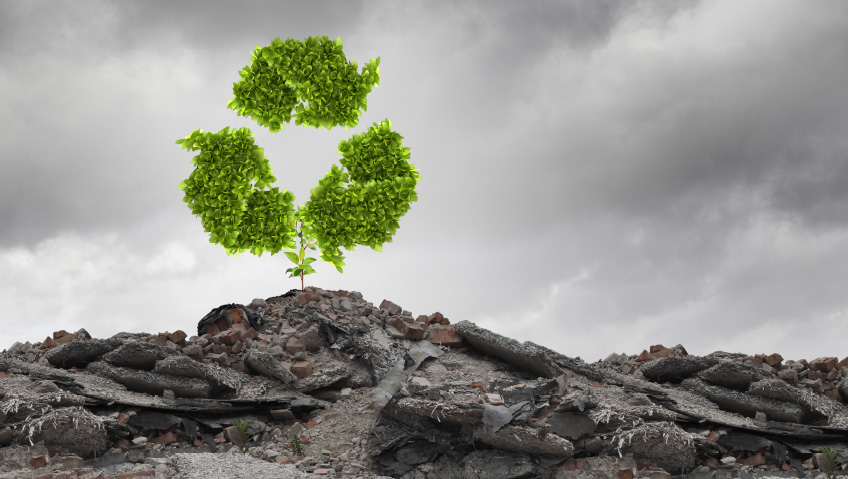
As a society, we are encouraged from an early age to make the world a better place. Public schools across North America have programs for children as young as four to learn climate literacy, from why littering is bad to reducing food waste, recycling/reuse, and how pollution affects air, food, and water. While these initiatives are well-intentioned, many are led to believe businesses, suppliers, manufacturers, and governments are telling the truth about their green initiatives.
When we set out our blue bins, we assume the paper, plastic bottles, and glass jars we sorted and washed will go into the appropriate recycling stream, not landfill. And when multinationals like Keurig and Nestlé say billions of polypropylene #5 K-Cup® pods and Nespresso coffee capsules sold every year are recyclable, we take them at their word.
Everywhere you look, the world has gone green. Paperless offices, improving operational efficiencies, sourcing materials locally to save fuel, improving energy use through LED lights and solar panels, and re-purposing wastewater for irrigation are the norm. For companies of all sizes, these sustainability initiatives and others are often announced to shareholders and the public in the name of good corporate citizenship. The truth, however, doesn’t always line up with reality.
Caffeine controversy
Launched in 1998, Keurig brewing systems initially targeted office workers. The concept was enticing—unlike traditional drip coffee makers, individual K-Cup pods ensured coffee, teas, and even ciders were hot and fresh, instead of sitting in a pot for hours. The revolutionary brewing system soon caught on and expanded to households.
A decade ago, Keurig advertised its K-Cups were recyclable. Most recycling facilities, however, could not recycle the combination of plastic cups, coffee grounds, and foil lids. In 2018, this resulted in the company’s paying $10 million following a class action lawsuit in the Northern District of California Court and millions of dollars in other fines over false claims. Thanks to recent blue box program expansions, some of the estimated 40 million K-Cups used every day are now recyclable in some areas as of early 2026. Similarly, Nespresso’s colourful aluminum capsules can be dropped off at Nespresso Boutiques, returned in the mail at no cost to customers, picked up, or placed in designated recycling bags.
Throwing in the towel
The term “greenwashing” was coined 40 years ago. Some call it ‘ecobabble,’ while others refer to it as ‘eco-fraud,’ ‘sustainability scam,’ ‘greenwishing’ or ‘green rhetoric.’ Investopedia defines greenwashing as “a prevalent and often deceptive practice in today’s marketing landscape, where companies portray a misleading image of environmental responsibility to consumers.”
Like many movements, the fight against exaggerated or false environmental initiatives started small. During a 1983 visit to Fiji, environmentalist Jay Westerveld stayed at a hotel where guests were encouraged to re-use towels to save water. The hotel was also undergoing expansion, causing “significant environmental disruption,” according to Pan-African law firm Eco-Law. This presented a conundrum for Westerveld, who questioned how the hotel could justify saving money washing fewer towels, but had no issue with destroying entire forests. In 1986, Westerveld coined the term “greenwashing” in an essay criticizing the growing “save the towel” messaging in the hospitality sector.
Decades later, greenwashing has grown to encompass more than re-using hotel towels. With countless new products and services introduced every year, tracking green claims has become increasingly challenging. Companies can, and often do, make dubious claims their goods and packaging are ‘locally sourced,’ ‘sourced from all-natural ingredients,’ or ‘crafted with sustainable materials,’ but what does it all mean?
Regulatory organizations, from the Federal Trade Commission (FTC) and the Environmental Protection Agency (EPA) to Canada’s Competition Bureau, exist, and a host of third-party certifiers like Green Seal, B Corp, and Fair Trade Certified monitor these claims. Companies caught greenwashing and betraying these certifications can be subjected to investigations, class action lawsuits, retractions, and worst of all, reputational damage.
Perception across generations
While some older generations might shrug off greenwashing concerns, younger consumers aren’t so forgiving. In today’s world of instant messaging, TikTok videos, Instagram, and other social media sites, good news spreads quickly—and so does bad news. A recent study of Gen Z—typically identified as those born between 1997 and 2012—shows they are alert to suspect claims and will boycott companies caught greenwashing.
In Raising the bar? How Generation Z perceives corporate reputation and environmental commitment, the authors examine how different generations perceive “corporate environmental commitment and reputation” across nations including Spain, Italy, and Chile. The study examines important, yet underexplored, perceptions of Corporate Social Responsibility (CSR).
“Generation Z actively observes, evaluates and judges companies’ environmental behaviour,” stated study lead, Elisenda Estanyol. “The most striking thing is that Gen Z isn’t indifferent or complacent: they actively observe, assess and judge the companies’ behaviour in terms of the environment. They don’t just consume; they construct a brand’s reputation, based on what it does or doesn’t do for the environment. The study shows a generation that is especially sensitive to greenwashing and ready to hold companies accountable when they say one thing and do another.” A generation raised on ideas of sustainability, concerns for the environment, and measurable results, Gen Z is far less forgiving of corporate inconsistency and false claims than others.
Holding companies accountable
Companies of all kinds and sizes have been called out for greenwashing, with some of the most egregious examples being big oil producers. When oil prices plummeted during the COVID-19 pandemic, majors like BP, Chevron, and Exxon Mobil vowed to slash carbon emissions and embrace sustainable initiatives like ‘green hydrogen’ and biofuels. Just a few years later, oil prices soared after Russia waged war on Ukraine.
The narrative keeps shifting with the escalating conflict in the Middle East, with the messaging now being how vital fossil fuels are to the planet. As Clean Creatives, a group connecting professionals to end public relations and ad industry work in fossil fuels, stated, “Greenwashing is no longer the core strategy of the fossil fuel industry—it’s about power and political influence.”
Even corporations with reputations for being forward-thinking have been called out for false environmental claims. Swedish multinational conglomerate IKEA, known for its ready-to-assemble furniture, has been criticized numerous times for greenwashing. Some allegations include children’s furniture made from illegally sourced Russian wood, questionable claims made to the Forest Stewardship Council (FSC), and the company’s “zero waste” philosophy, which is seemingly at odds with the company’s massive use of packaging materials.
All companies—from small shops to major billion-dollar businesses—need to be aware of scrutiny by governments, agencies, and the public in particular when making claims about sustainability, sourcing, recycling, and reuse. Many people today, particularly younger consumers and investors, review CSR claims and refuse to support companies who exploit child labour, employ poor working conditions, violate safety protocols, or have been caught greenwashing.
While it isn’t always easy to spot brands making untrue sustainability claims to help market their products, it is important to investigate eco-friendly credentials before buying and to seek out those producers who walk the talk. Ultimately, the fight against greenwashing reflects a broader shift in expectations; people are no longer content with vague assurances or symbolic gestures—they want proof. As awareness grows and scrutiny intensifies, the companies that succeed will be those willing to align their words with their actions, helping to build not just a greener marketplace, but a more honest one.