In today’s manufacturing, medical, industrial, robotics, and autonomous systems markets, many companies have a product vision but not the full engineering, manufacturing, compliance, and lifecycle support needed to bring that vision into the field. Standard off-the-shelf computers often cannot meet the requirements for ruggedness, customization, integration, long-term availability, or project-specific certification.
That is where Estone Technology has built its position.
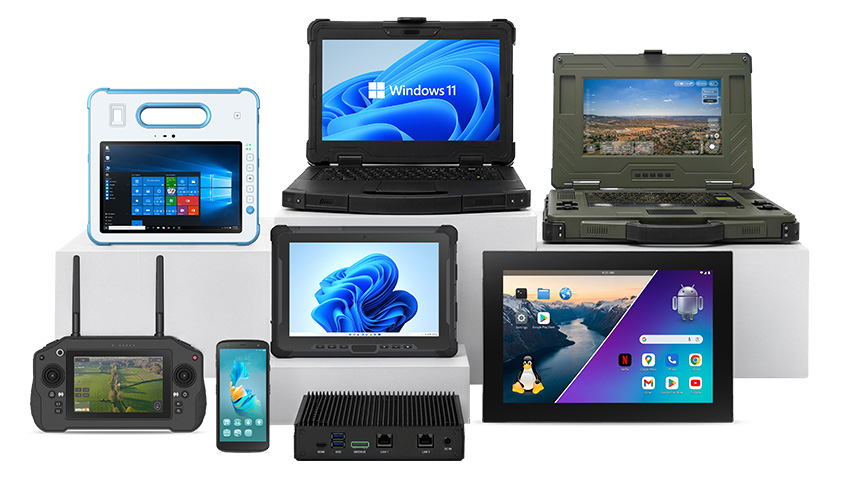
Estone Technology is a rugged computing ODM/OEM engineering and manufacturing partner that helps customers turn product ideas, technical requirements, and early-stage concepts into reliable, production-ready solutions. From rugged tablets and laptops to industrial panel PCs, HMIs, embedded computing systems, medical-grade platforms, and rugged control systems for robotics and autonomous applications, Estone supports customers who need computing platforms built for demanding environments.
The company’s role is not simply to provide hardware. It helps customers bridge the gap between a product vision and a deployable solution that can survive real operating conditions, integrate with larger systems, meet project-specific requirements, and remain supported throughout its lifecycle.
As Sales Engineer Jo Yee Ong explains, “Many customers come to us with a product idea, a PRD, a set of technical requirements, or a market need. Our role is to help turn that vision into a rugged computing solution that can be engineered, manufactured, certified where required, and supported in the real world.”
From computer business to rugged computing partner
Estone’s foundation began with a small computer business known as Stone Computer. In its early years, the company competed in the broader consumer computer market, where differentiation was difficult and long-term value was often limited. Over time, the team saw a stronger opportunity in specialized computing applications, where reliability, customization, engineering support, and long-term product availability mattered more than standard product availability.
That shift became the foundation for what would later become Estone Technology. After adopting the Estone name in 2008 and establishing operations in both California and Ohio, the company moved deeper into rugged computing, embedded systems, and ODM/OEM development for industrial, medical, and mission-critical applications.
Today, Estone works with customers that need computing platforms tailored to specific technical, environmental, regulatory, and operational requirements. Some customers begin with an existing rugged tablet, panel PC, HMI, embedded system, or control platform from Estone’s product portfolio and customize it for their application. Others begin with only an idea, concept drawing, product requirement document, or market opportunity, and Estone helps guide that concept toward a manufacturable product.
This flexibility has become one of the company’s defining strengths.
Moving from concept to deployment
Developing a rugged computing product is rarely as simple as selecting components and placing them inside a durable enclosure. Customers often need to consider display performance, touch functionality, processor selection, thermal design, battery life, connectivity, wireless communication, operating system support, mechanical structure, certification requirements, software integration, firmware behavior, lifecycle management, and supply-chain continuity.
For companies that do not have all of these resources internally, the path from product idea to finished product can be difficult, expensive, and time-consuming.
Estone helps reduce that complexity by supporting customers throughout the product development process. The company can help refine early requirements, identify practical design options, customize baseline platforms, support full custom development, and provide manufacturing and lifecycle support after deployment.
For many projects, Estone can also support certification planning and project-based compliance preparation. Depending on the final product, target market, and application, certification requirements may influence decisions related to enclosure design, material selection, wireless modules, power systems, electromagnetic compatibility, medical-grade requirements, environmental testing, and documentation. By considering these needs earlier in the development process, Estone helps customers reduce redesign risk and move more efficiently toward market readiness.
“Our job is to help customers make the right decisions early,” says Ong. “Small choices in hardware design, component selection, software integration, certification planning, or mechanical structure can affect cost, reliability, serviceability, and product availability years later.”
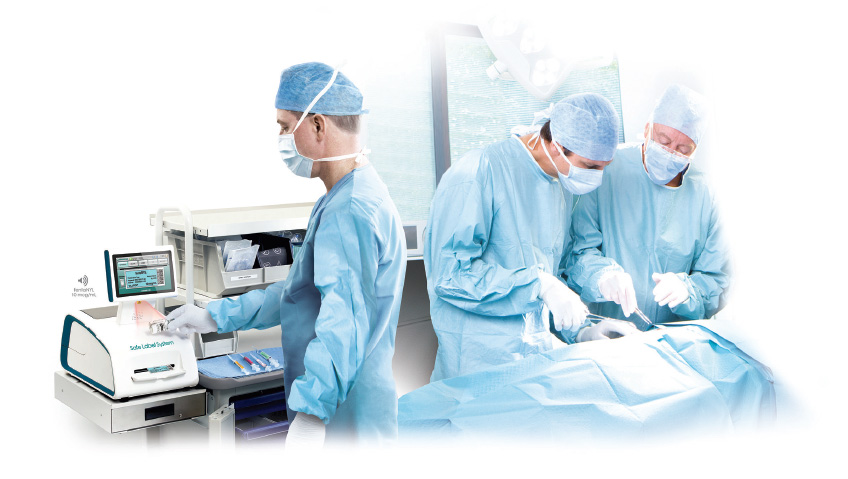
For Estone, a successful product is not measured only by whether it meets a specification sheet; it also has to perform reliably in the environment where the customer will actually use it. In medical environments, that may mean supporting specialized imaging, cleanability, antimicrobial materials, medical-grade certifications, long-term availability, and integration with clinical workflows. In industrial automation, it may involve panel PCs or HMIs that can operate in harsh conditions, support specific I/O requirements, and integrate with factory systems. In robotics and autonomous systems, the need may involve rugged control platforms, sunlight-readable displays, reliable wireless communication, open architecture support, and project-based compliance considerations.
“When our customers can deploy their systems with confidence, that is when we know the engineering work has created real value,” says Ong. “A successful product is not only about meeting the specification on paper. It also has to perform reliably in the customer’s actual operating environment.”
Flexible platforms, white label solutions, and custom development
Many of Estone’s rugged computing products are designed to serve as flexible baseline platforms. These platforms give customers a practical starting point while still allowing room for customization.
For some projects, adapting an existing rugged tablet, laptop, panel PC, HMI, embedded system, or control platform can help shorten development timelines and reduce risk. This approach can be especially valuable when a customer needs to move quickly but still requires changes to hardware, I/O, enclosure design, firmware, software, branding, operating system, certification path, or integration behavior.
For other projects, customers may need a fully customized product developed from the ground up. In those cases, Estone can help take a customer’s concept, PRD, or market requirement and turn it into a complete computing platform designed for manufacturing and deployment.
In addition to offering rugged computing reference platforms, Estone supports customers that need white label, private label, or fully customized ODM/OEM solutions. For customers building their own product lines, this means Estone can provide rugged computing platforms that are customized to match the customer’s brand, application, market position, and technical requirements.
This support may include custom branding, enclosure modifications, hardware configuration, I/O adjustments, software image customization, packaging support, documentation coordination, and lifecycle planning. For some customers, a white label or private label approach can help accelerate time to market by starting with a proven rugged computing platform and adapting it into a product that can be sold under the customer’s own brand.
For others, Estone can support a deeper ODM development path, helping transform a concept, PRD, or specialized product requirement into a purpose-built computing solution. This flexibility allows customers to choose the development model that best fits their business strategy, timeline, budget, target market, and supply-chain needs.
More than hardware
As connected devices become more advanced, many customers need support that goes beyond the physical device itself. For HMI, panel PC, embedded platform, and connected system projects, hardware is only one part of the final solution. The user interface, operating system, update method, device management tools, connectivity, software environment, certification considerations, and field maintenance strategy all influence whether the final product can be deployed and scaled successfully.
“These projects are rarely just about the device itself,” says Ong. “For many HMI and panel PC customers, the hardware, user interface, update method, and management platform all have to work together. When those pieces are planned together from the beginning, the final product is easier to deploy, maintain, and scale.”
Estone can help customers shape the user experience, support administrative management tools, enable over-the-air update capabilities, and develop companion mobile applications when required. This is especially important for customers deploying connected devices at scale, where remote support and software update capabilities can reduce the need to retrieve products from the field.
By combining rugged computing hardware with practical software ecosystem support, certification planning, and lifecycle support, Estone helps customers move from product concept to deployable solution with greater efficiency and confidence.
Global support and manufacturing flexibility
In many of Estone’s target industries, standard consumer devices cannot meet the requirements for long-term availability, customization, ruggedness, or lifecycle support unless purchased in very large volumes. Instead, customers need a platform that can remain stable, consistent, and supported for years.
This is especially important in healthcare, industrial automation, robotics, autonomous systems, and mission-critical applications, where frequent component changes, supply-chain instability, or limited technical support can create serious operational risk.
To meet those needs, Estone has built its business around four key strengths: cost efficiency, engineering responsiveness, end-to-end solution capability, and long-term partnership.
The company’s global footprint allows it to support sourcing, production, logistics, certification-related coordination, and customer collaboration across multiple regions. With office and support presence across the United States, Europe, Japan, and China, along with manufacturing flexibility in the United States, Vietnam, and China depending on customer requirements, Estone can help customers align production strategy with cost targets, compliance needs, supply-chain resilience, and regional market expectations.
“We support customers from the earliest design discussions through deployment and lifecycle management,” says Ong. “That continuity is important because the product does not end when it leaves the factory. Customers need confidence that their platform can be supported, maintained, and improved over time.”
Supporting growth markets
As customer needs continue to evolve, Estone has expanded its regional support capabilities to better serve key growth markets.
In 2025, the company launched its Japanese subsidiary to support increasing demand from medical and healthcare customers. In these markets, localized collaboration, engineering communication, technical support, and long-term reliability are especially important.
Estone also expanded its U.S. warehouse operations as part of its growing focus on the drone, robotics, and autonomous systems markets. Customers in these sectors are placing greater emphasis on trusted supply chains, localized support, shorter deployment timelines, and project-based compliance considerations, including NDAA- and TAA-related requirements.
Because Estone supports customers across industrial, medical, robotics, autonomous systems, and commercial technology markets, the company also participates in leading industry events around the world. In 2026, Estone exhibited at Japan IT Week, XPONENTIAL, and the National Restaurant Association Show, strengthening relationships across medical, embedded computing, robotics, autonomous systems, and connected commercial technology markets.
These investments reflect where Estone sees strong opportunity in the years ahead. As robotics, autonomous systems, medical technology, industrial edge computing, and connected device applications become more intelligent and more demanding, the need for customizable rugged computing platforms is expected to continue growing.
Turning product vision into real-world solutions
For companies developing specialized computing products, the challenge is not only creating a device that works. It is creating a product that can be engineered, certified where required, manufactured, deployed, maintained, and supported over time.
That is where Estone’s role becomes valuable.
Whether a customer needs to customize an existing rugged platform, develop a white label product under its own brand, or build a purpose-built device from the ground up, Estone helps reduce development risk, shorten the path from concept to deployment, and support the product throughout its lifecycle.
Ultimately, Estone’s goal remains consistent: to serve as a long-term rugged computing ODM/OEM partner that helps customers turn ideas, requirements, and product visions into reliable real-world solutions.