The concept of planned obsolescence—products specifically designed to have a limited lifespan—stems in part from two events that took place in the 1920s.
The first event occurred just before Christmas in 1924, when representatives of light bulb manufacturers met in Geneva, Switzerland. This international group formed something called the Phoebus cartel to control the global light bulb market. Among other issues, the cartel was concerned about the longevity of their products; at the time, household light bulbs lasted an average of 1,500 to 2,000 hours before they needed to be replaced.
This lengthy lifespan benefited consumers but was a drag on new sales. So, the cartel devised a scheme to develop shorter-lasting bulbs, then poured money into R&D to make this goal a reality. By altering the filament and other technical interventions, the lifespan of household light bulbs was reduced to about 1,000 hours. The Phoebus cartel eventually fell apart, but its signature achievement remained a crucial step in the move toward planned obsolescence.
Planned obsolescence received another boost in the later years of the 1920s as a way to address a crisis in the American automotive industry. While the car had proven to be an overwhelming success, vehicle manufacturers were worried about market oversaturation. Many drivers were content to stick with one car for years on end before buying another.
To goose sales, Alfred Sloan, CEO of General Motors, came up with an ingenious idea. Instead of launching a brand-new car each year—a move that would have been prohibitively expensive—GM introduced the notion of an “annual model change.” Automotive manufacturers would tweak their lineup each year, adding new colours, enhancements, and other features to existing vehicles. Many of these modifications were minor, but it didn’t matter; the objective was to make old models seem hopelessly passé. The plan worked, and buying the latest model each year, even if your current car worked fine, became seen as a marker of wealth.
These examples highlight the different types of planned obsolescence. There is manufactured obsolescence (products are deliberately produced using materials with a limited lifespan), systemic or technical obsolescence (upgrades are introduced that render older products useless), and stylistic obsolescence (consumers are told they will be uncool and out of touch if they don’t buy the latest and greatest version of an already available product).
If the light bulb conspiracy exemplified manufactured obsolescence, systemic obsolescence is commonplace in the consumer electronics industry. Think of software updates that aren’t compatible with older computers and laptops, or electronics with parts that can’t be replaced. Stylistic obsolescence is rampant in the smartphone industry, where small changes are irresistible to tech enthusiasts who want to stay ahead of the curve.
Planned obsolescence keeps consumers buying, which in turn is good for the economy. On the downside, the need to constantly buy new goods results in mountains of cast-off electronics, clothes, household items, cars, and other consumer wares.
Other issues abound. Manufacturing frequently involves the use of what are called “conflict minerals,” minerals commonly found in regions wracked by war, poverty, and abusive governments. Some of the gold, tin, and tungsten used in electronics and other goods is mined in the Democratic Republic of Congo, which has been embroiled in extremely violent civil warfare for decades.
The constant churn of new consumer purchases also prolongs economic abuses in developing nations. Many electronic products and other products subject to planned obsolescence are produced in low-cost overseas nations. As long as demand for brand-new items remains strong, miserable working conditions will prevail in such locales.
The profligacy inherent in planned obsolescence has produced a large backlash, as evidenced by the rise of the “right to repair” movement. Consumers are demanding information on how to fix electronics and other manufactured goods, and leaning into a trend called “BIFL.”
“BIFL stands for Buy It For Life, and the acronym encompasses both an approach to shopping as well as a description of products that are designed and manufactured to last a lifetime. Buy It For Life items can last the life of the owner or the accepted life of the product, or they might come with an ironclad warranty such that you won’t have to purchase the item ever again,” explains Roxanne Dawson in a February, 2024 article in Forbes magazine.
The BIFL movement is being spurred by consumer self-interest and concern for both the environment and global economic disparity. Purchasing long-lasting products is a good way to limit the amount of consumer goods in landfill, the need for conflict minerals, and exploitative, low-cost, offshore manufacturing practices.
While Buy It For Life has become a new buzz phrase, the movement has very old roots. Prior to the Industrial Revolution, pretty much all consumer goods were BIFL. Peasants who bought shoes from a cobbler could be expected to keep them for years, mending them when necessary. Even if they paid for repairs, keeping footwear for long periods was more affordable than tossing out old shoes and buying new ones constantly.
There are two major drawbacks to Buy It For Life wares: they are generally more expensive than conventional consumer goods and harder to find. If you do a comparative analysis, however, buying a single pricey item might be less expensive over the long run than having to purchase the same item multiple times at a lower price.
As for availability, major media outlets such as Forbes, Wired magazine, and the New York Times have all compiled lists of recommended BIFL products and the companies that make them.
The Forbes list includes Merino wool socks from a firm called Darn Tough, which are ideal for hikers but can be used by anyone fed up with constantly buying replacement socks due to rips, tears, and holes.
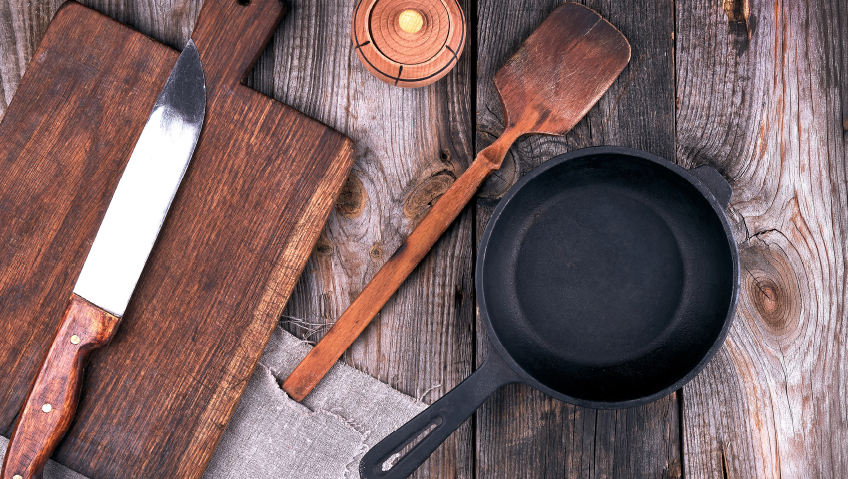
In terms of kitchenware, Forbes recommends the Field Company No. 8 Cast Iron Skillet, a pan that the makers claim will last for decades, and the Le Creuset Dutch oven. The latter features enamel coating and requires some care, as it needs to be washed by hand and you’re not supposed to use metal utensils with it. On the plus side, it offers longevity and reliability.
The list from Wired, published in February 2025, includes the Shun Cutlery Sora 8-Inch Chef’s Knife (the contributor who posted this product sharpens it twice a year), the HMPLL Whetstone Kit (a set of whetstones to keep kitchen knives in peak cutting condition), and a Sonder Los Angeles Walnut End-Grain Cutting Board for slicing, which is less likely to warp than other versions.
Wired also recommends the Dualit Classic 2 or 4-Slice NewGen Toaster (originally designed for commercial kitchens, these hand-assembled toasters are extremely reliable and hardy) and the Weber Original Kettle 18-Inch Charcoal Grill, a simple design with tub, ash catcher, metal legs, and plastic wheels that lasts for ages if kept covered or stored in a garage when not in use.
Birkenstocks are also featured on the Wired list. While these slip-on sandals are frequently mocked as hippie footwear, Birkenstocks are actually very durable if kept in good condition with water and stain repellent, cleaning solution, and similar care.
Interestingly, Wired also includes a few old-timey items, such as the Lamy 2000 Extra-Fine fountain pen—if you don’t mind replacing the ink, a fountain pen can last for decades, unlike disposables—and Zippo lighters. Introduced in the 1930s, Zippos became hugely popular due to their reliability. They can also last for decades if users are willing to replace the wicks and flints.
The New York Times list, published in September 2025, covers a wide swath of consumer goods, including men’s jeans. It offers two BIFL jean brands: A.P.C. New Standard dungarees, which are pure cotton and “fashionable but not trendy,” and 3sixteen CT-100x denims. The latter are made with heavyweight denim that is tough to break in but very long-lasting.
And people with home gyms might want to investigate the Rep Fitness Kettlebell, a simple set of colour-coded weights with wide handles and a lifetime warranty for U.S. and Canadian customers.
Beyond these goods, some items have always been made with BIFL in mind. High-end musical instruments, for example, can be used for decades or even centuries. Among guitarists, playing a 1959 Stratocaster or 1965 Gibson SG in excellent condition is a point of pride. The movie The Red Violin centers on a priceless instrument passed between different owners over three centuries. The violin’s age is not considered a detriment but rather an attraction.
Of course, not everything lends itself to BIFL. While buying the latest car model each year just to stay trendy might be excessive, only an expert mechanic, or someone who lives near a repair shop, would likely feel comfortable driving a 1944 Buick Roadmaster on their daily commute.
“Some categories lend themselves well to lifetime purchases: homewares, outdoor gear, and heirloom clothing came up in my research,” writes Dawson. “Other categories, like beauty products, technology, and trendy fashion, encompass products that you will likely need to replace over time for safety, utility, and comfort. As a general rule, regardless of product type or category, following the manufacturer’s care instructions will help prolong the life of the items you buy.”
Planned obsolescence was never an accident; it was a strategy, engineered in boardrooms and refined over decades to keep consumers spending. But awareness is a powerful counterforce. As the BIFL movement gains momentum, shoppers are increasingly voting with their wallets, choosing quality over novelty and durability over disposability. In the end, buying less but buying better may be one of the simplest and most consequential choices a consumer can make.