As an independent business in Milwaukee, Wisconsin, Xymox Technologies custom designed and manufactured a variety of innovative products for the digital display and touch screen sectors. Since merging with the RAFI Group of Germany, the firm has grown its market reach, product line, and ambitions. The award-winning company also has a new name: RAFI North America.
“Previously, we provided a relatively niche product into our market segment. Joining RAFI has dramatically increased our product offering to our customers,” says Dean Hotvet, Director of Sales and Marketing.
CEO and President Tihomir Tesic agrees. “As a small Midwest company, you’re sort of limited to what you can get out to the market.”
The company was last profiled by Manufacturing in Focus in November 2023. At the time, the merger with the RAFI Group (a world leader in electromechanical components, electronic assemblies and systems, and engineering services) had just occurred, and RAFI North America has since rebranded, retooled, and recalibrated its focus.
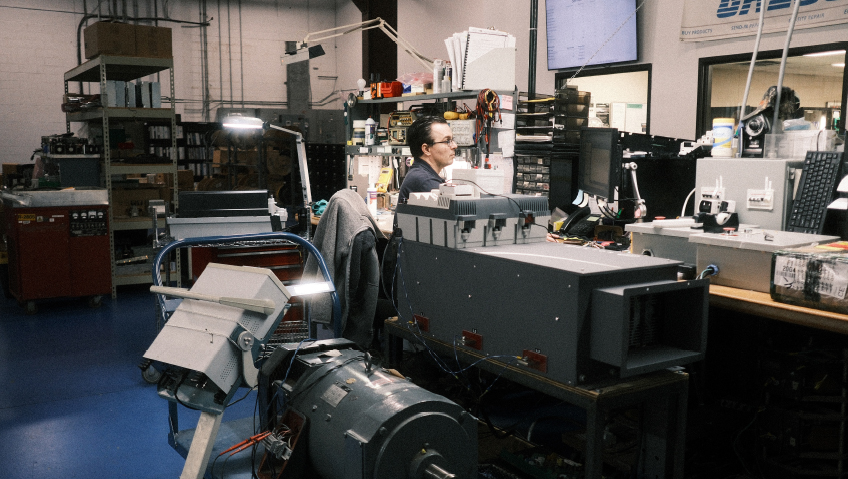
The team continues to work out of a 55,000-square-foot Milwaukee plant, providing services including full production, sheet-fed printing, designing and engineering, optical adhesive lamination, environmental testing, laser cutting, and more. Products made at this site include specialty circuitry and capacitive touch sensors (devices which enable fingertip manipulation of capacitive touch screens in computer tablets, smart phones, et cetera). RAFI North America also makes membrane switches, which are Human Machine Interfaces (HMI) that are used to open or close circuits when pressure is applied. Membrane switches are made by applying layers of printed film and other kinds of material.
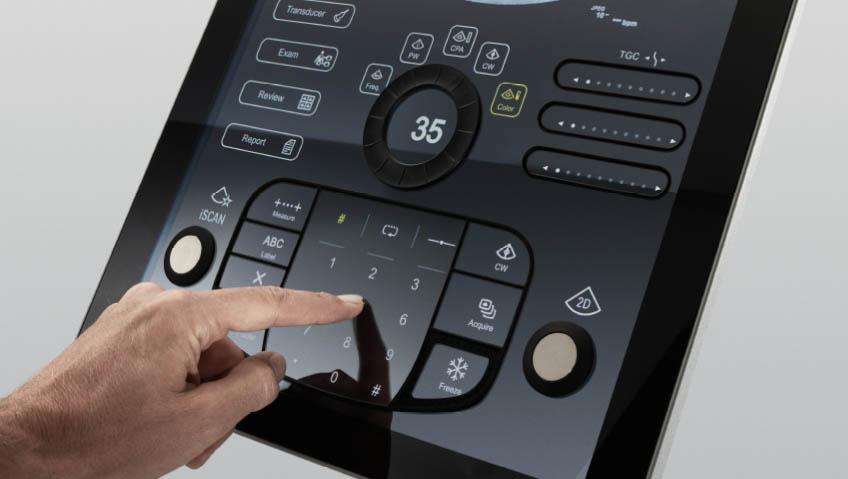
While retaining all its existing competencies, new services and products have been added to RAFI North America’s portfolio. “We have been making internal changes to accommodate new products,” Hotvet explains. “We have brought on the assembly of some high-value products [including] ultrasound control panels. There may be 10 to 15 different parts in the bill of materials for a membrane switch; an ultrasound control panel has 400 parts in the bill of materials. It’s a dramatic change in how products flow through the plant, and we’ve had to retool some aspects of the plant for that.”
Custom work remains RAFI North America’s forte, although the company does maintain a components segment that offers off-the-shelf products, he adds.
As Xymox, the company produced solutions for the appliance, food equipment, medical equipment, gas pump, power distribution, hand-held devices, and wearables markets. RAFI North America still works in these sectors but is looking to expand into construction and agricultural equipment and off-road vehicles, among other sectors. The merger has allowed RAFI North America to tap into the knowledge and resources of its huge parent company, pushing the firm to a new level and broadening its supply base. “Within the RAFI Group, RAFI North America is now considered the center of excellence for printed electronics and related products,” says Hotvet.
In terms of suppliers, “we have a larger ability to pull from within, as we’re now part of the RAFI Group. Our vertical integration is increasing, which simplifies our supply chain,” says Tesic.
Back in Germany, the RAFI Group stands well-positioned to gain from its decision to bring Xymox Technologies into the fold. Thanks to recent trade deals and tariffs, the RAFI Group is eager to expand its manufacturing footprint in the U.S. By making products in America, the RAFI Group can be closer to its U.S. customer base while avoiding tariffs and other barriers that are making international trade an increasingly costly affair, Tesic explains.
Certainly, RAFI North America is more than up to the challenge of producing high-value products. The company is ISO 9001:2015 certified and ITAR (International Traffic in Arms Regulations) registered. (ITAR is a body of U.S. imposed rules regarding the sale and purchase of defense-related weaponry and similar products.) If all goes to plan, RAFI North America should attain ITAR certification in the near future, says Tesic.
The company has a well-documented quality assurance process for products that fall under the legacy or “Xymox side of the business,” he continues. And solutions of greater complexity such as ultrasound control panels are put through an even more comprehensive QA process that entails automation, a variety of tests, camera systems that scrutinize parts for flaws, and other forms of electronic scrutiny.
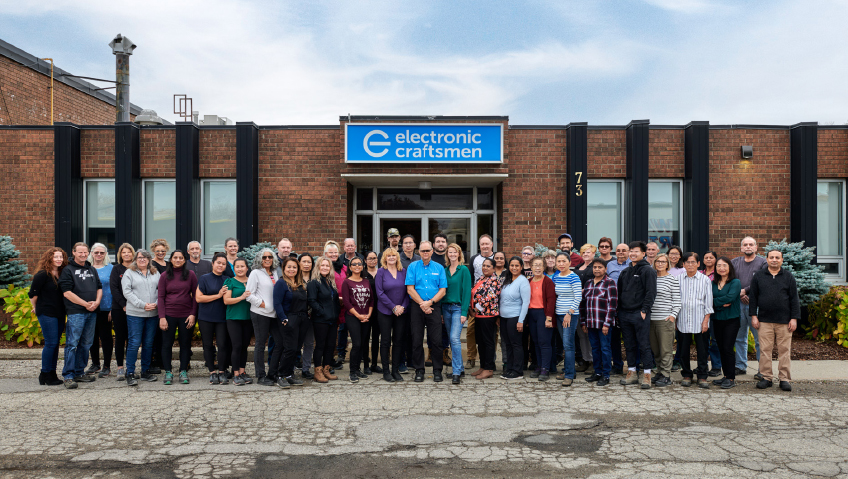
RAFI North America has around 90 employees at present, compared with 88 at the time of our previous profile. “We look for employees who have the right balance of hard and soft skills,” notes Human Resources Manager Krista Pitman. “We seek candidates who have the technical competence, relevant education, and level of experience we are looking for, paired with someone who has excellent teamwork, communication, and problem-solving skills.”
She explains, “Our culture is that of a small company with the support of a much larger company. We care about our employees, and they care about one another and our customers. This is demonstrated through daily actions that are rooted in finding the best solutions… We’re a very family-centric company,” she shares.
For all the firm’s technical prowess, RAFI North America’s success largely stems from its unique culture, Tesic adds. “At the end of the day, we can come up with the wildest ideas of how to make the product, but growth and success… is ultimately based on the morale and culture in the company.”
Indeed, RAFI North America’s values include Integrity (“Act the same when no one is watching”); Results (“Always strive for continuous improvement through achieving goals”); Service (“Treat our customers with an attitude of service”); and Employees (“A healthy business that has healthy employees teaches healthy lessons for business, personal growth, sound minds, and healthy bodies”). And the team believes that it’s also vital to maintain open communication, motivate staff, and make the workplace fun.
The company’s combination of a progressive, supportive culture and robust technical skills has not gone unnoticed. A product called SAFETY TOUCH®, produced through a RAFI Group/RAFI North America collaboration, earned industry kudos last year, being named one of OEM Off-Highway Magazine’s Top New Products of 2024 in the operator cab category. SAFETY TOUCH® also received a German Innovation Award in the Excellence in Business to Business Electronic Technologies category.
“Obviously, we’re very proud of the honor of achieving [these awards]. SAFETY TOUCH® was developed by our German colleagues,” states Hotvet.
SAFETY TOUCH® acts as a super-capacitive touch screen, offering displays and data and enabling operator input. Intended for use in construction, forestry, and agricultural machines, SAFETY TOUCH® allows operators to control machine functions via a touchscreen that normally would require separate buttons or switches. By reducing the number of switches needed in a control console, SAFETY TOUCH® makes it simpler to run machinery and helps the operator focus, reducing the odds of an accident occurring. The product has garnered an enviable Performance Level D rating (an ISO machinery-related safety level concerning risk reduction).
RAFI North America is also working on “an encoder with a programmable haptic response,” says Hotvet. The product is called Smart Haptic and utilizes haptic technology, the science of simulating tactile sensations through hardware or software. Ever set your cell phone to “vibrate” mode (causing it to shake when a call comes in) or felt and heard an alert emitted by your wearable FitBit (letting you know when a certain exercise-related benchmark has been reached)? If yes, then you’ve experienced haptic technology in action.
RAFI North America is also looking at a product it calls “a steering joystick. That is, literally, where you use a joystick to operate a vehicle. We’re also doing a lot of work with strain gauges,” says Hotvet, referring to sensors that are used to measure strain.
The company is also keeping a close eye on “megatrends” such as Electric Vehicles (EVs) and cybersecurity, he adds.
Over the next five years, RAFI North America wants to “aggressively grow the U.S. market,” become a leading supplier in the agriculture machine sector, enhance its medical offerings, and “add more value to the products we’ve already made,” says Tesic. The team is also examining the possible benefits of adding Artificial Intelligence (AI) to HMI systems, as well as opportunities posed by autonomous vehicles and equipment.
“Wherever the market goes, we feel like we can be a step ahead and offer solutions to the customer base,” says Tesic. “We really focus on how to solve people’s problems… I think where RAFI really shines is offering a solution that helps the customer at the end consolidate their suppliers, components, or process. It’s all about efficiency at the end.”