RealWear began operations in Vancouver, Washington in 2016, and over the better part of the ensuing decade, its founders have established a footprint for creating wearable computer interfaces: smart glasses. In early 2025, Sebastian Beetschen stepped into the role of Chief Executive Officer after Dr. Chris Parkison, its co-founder and former CEO, announced he was stepping down.
Beetschen’s background is in engineering, specifically in 3D computer vision, and he has previously worked on mixed reality headsets like Microsoft’s Hololens, a mixed reality device from one of the industry’s biggest players. In his experience, many such headsets and tools often have the same problem in that they try to do everything but end up excelling at nothing in particular. While impressive, they do not provide the help for customers that RealWear can.
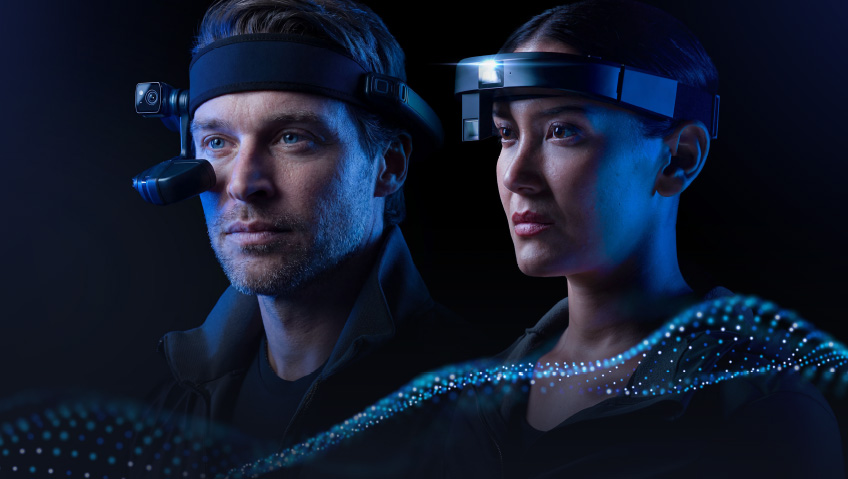
RealWear’s suite of devices consists of smart glasses that are designed for particular environments and uses. These are further complemented by associated software and services, which include proprietary applications, custom training, and more. Beetschen explains that the company’s devices, such as the RealWear Arc 3 and the Navigator Z1, are “the first devices in human history that see the world as we do,” able to see through the customer’s eyes and provide help on the level of a personal assistant.
The company focuses on making its devices helpful and easy to use, as its long-term vision is to have a higher throughput between humans and machines than can be achieved via typing on keys or using screens. Devices like its smart glasses can help bridge the gap in user-system interfacing industry-wide. The goal is to have the best hands-free personal assistant technology possible for every person on the planet, something only possible through the technology with which RealWear works. “If the larger companies aren’t doing it, then we will,” says Beetschen.
According to him, so many previous generations of humanity’s ancestors were generally living worse lives than we are, and the company takes a certain amount of inspiration in how hard generations before us have worked to make our lives simpler. He believes it is therefore the responsibility of RealWear to make the future brighter and greater, while leveraging machine learning and artificial intelligence (AI) for good, making it accessible in an intuitive and effortless way.
Being active in a more nascent field of the technology sector, the path to success has not always been neatly laid out and has often required trial and error. Previously, the company had tried providing step-by-step instructions for frontline workers using the device when performing maintenance and inspection tasks. The process of doing so was very rigid, whereas reality is often more fluid and messy, and what worked in theory to get clients up to speed did not always end up working in practice, Beetschen says. With newer technology, supported by AI, RealWear can see what a person is doing in real time and act as a helpful colleague that helps a customer better understand a task while letting them do everything in their own order and style.
When it comes to technology, RealWear is putting a great deal of effort into upgrading and refining its operating systems as many figures within the industry are talking about how human language could be the next key interface with AI devices. Using buttons with a machine, says Beetschen, is very inefficient and time-consuming, so more and more people are using voice as an interface, an approach that the company has been already using for years. As the first truly voice-first operating system, the AI technology within a RealWear device can understand what a consumer wants, map to their settings, and act on their behalf, making it much more natural and faster to use.
The competition often makes their business by working in the consumer space, which Beetschen says is a tempting idea; however, RealWear is ultimately among the few successful players for smart glasses in the enterprise space, making its devices for businesses. The company focuses on the whole experience of its technology as opposed to just individual parts like hardware. This experience starts with the packaging, feel, and visuals of the product as well as with the software experience, operating system, and cloud management solutions.
“We’re the easiest to use and deploy,” says Beetschen, and RealWear is the only company of its kind able to create large-scale, reliable deployments.
As a result, its workforce solutions can be found across many different sectors. One of the company’s notable vertical markets is in warehousing and logistics for companies like Coca-Cola, Beetschen says. In these scenarios, frontline workers use RealWear to connect with an order from a client to obtain precise information quickly and to access other crucial data like visuals and map directions. This has helped employers like Coca-Cola increase their speed by about six to eight percent, a considerable difference.
Elsewhere, Ford has equipped around 1,000 of its American dealerships with RealWear devices and has now built a center where mechanics can use the technology to diagnose problems in its fleet of electric cars and fix them more easily.
While results like these are encouraging, the use of AI is still being perfected. Beetschen says that one current limitation is that a user still needs to provide much of the input to explain the context of what is desired from a prompt, a process that must be repeated every time; however, augmented reality devices like RealWear’s products innately gather the context of what the user is doing.
As the AI powering RealWear is a newer computing platform, there will always be challenges for early adopters. Many of the technology platforms and enterprise software systems of RealWear’s clients are still incompatible, which is why the company provides a whole solution that simply works without the need for legacy setups, just one way in which RealWear has its eyes set on the future and always keeps its customer base in mind.
Beetschen says that it is now time to liberate end users from technology that relies on buttons and screens, but the industry, broadly, is still waiting for a tipping point to help that along and clear up lingering confusion. This tipping point may very well come as a result of a landmark deal that the company is in the middle of making as of press time, which Beetschen says will be the biggest augmented reality deal in human history.
This deal will likely create industry buzz somewhere in the range of summer 2026 to the fourth quarter of the year. “We are living in an exciting time with AI,” Beetschen says, and it is also a good time for RealWear to interface with and leverage AI to help humans do even better. Whether it is outfitting a workforce with hands-free technology or being at the vanguard of an ongoing digital revolution, this team will not be satisfied until its technology can be used to help as many people as possible.