In industries where machinery operates under extreme conditions, reliability and performance are not optional, they are essential. From mining operations to forestry equipment and power generation systems, the machines powering these sectors must withstand demanding environments while meeting evolving regulatory and safety expectations.
Stronix positions itself at the intersection of engineering, manufacturing, and supply chain support to help original equipment manufacturers (OEMs) meet those demands. The company works with equipment manufacturers from the earliest design stages through prototyping and production, delivering engineered components that improve performance, safety, and compliance.
With roots in the mining sector and a growing focus on broader heavy-duty markets, Stronix brings a collaborative approach to product development. Its team works closely with OEM partners to solve engineering challenges while providing the manufacturing capabilities required to turn concepts into production-ready components.
Mining environments demand durable equipment capable of operating under exposure to extreme temperatures and challenging terrain. Over time, the team behind Stronix develops specialized knowledge in designing components that meet those requirements.
That expertise forms the foundation for the company’s current business model. Rather than focusing exclusively on mining operations, Stronix works directly with OEMs that manufacture heavy-duty machinery across several industries.
“We realized that the solutions we provide can benefit more than mining,” Aleeya Laureola, Marketing Manager at Stronix, explains. “If we work with the companies that actually manufacture the machines and help them enhance their products, it improves the industry overall.”
Today, Stronix partners with OEMs producing equipment used in mining, forestry, agriculture, and power generation, industries where durability and operational reliability remain critical.
One of the primary advantages Stronix offers its clients is the ability to address multiple engineering challenges through a single partner. In many cases, OEM engineering teams must coordinate with several different suppliers to redesign or improve components such as exhaust systems or thermal insulation blankets, and that process can add complexity and slow product development timelines.
Instead of working with multiple vendors, an OEM can collaborate directly with Stronix to address several design requirements simultaneously. From there, the company works alongside the OEM to develop an integrated solution. That collaboration often begins long before physical prototypes are built.
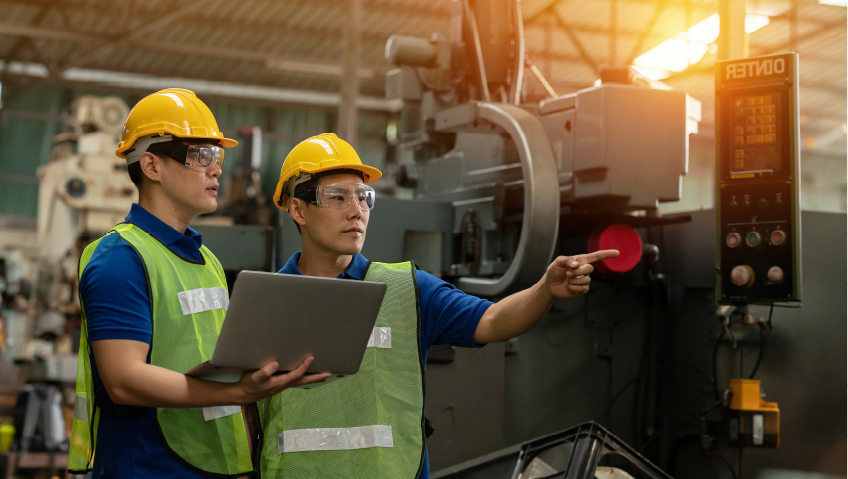
Stronix engineers frequently engage with customers during the early design phase, reviewing concepts and refining designs through detailed discussions and simulations. By addressing potential challenges early, Stronix helps OEM partners shorten their development cycles while minimizing costly revisions later in the process.
The company’s production environment reflects the customized nature of its work. Unlike facilities dedicated to high-volume manufacturing of identical parts, Stronix operates in a high-mix environment where many components are tailored to specific applications.
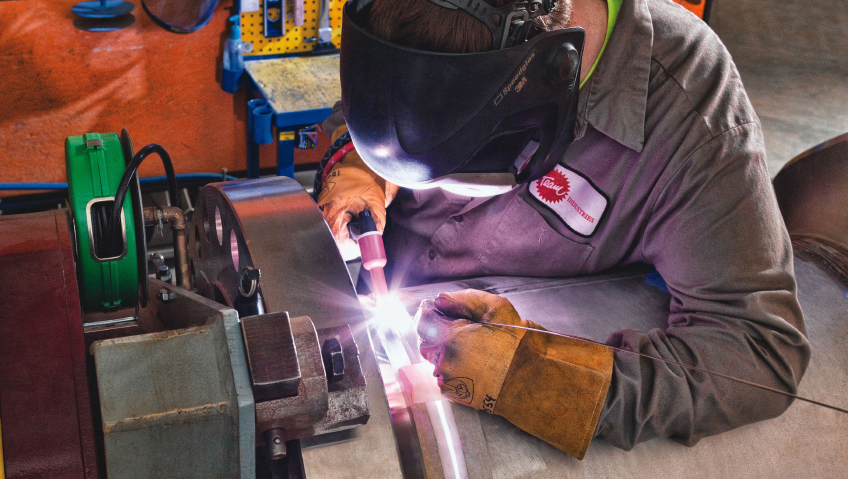
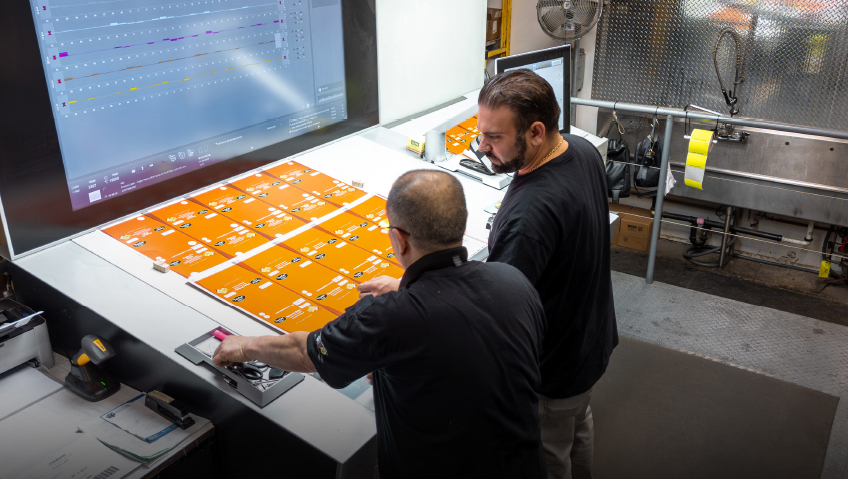
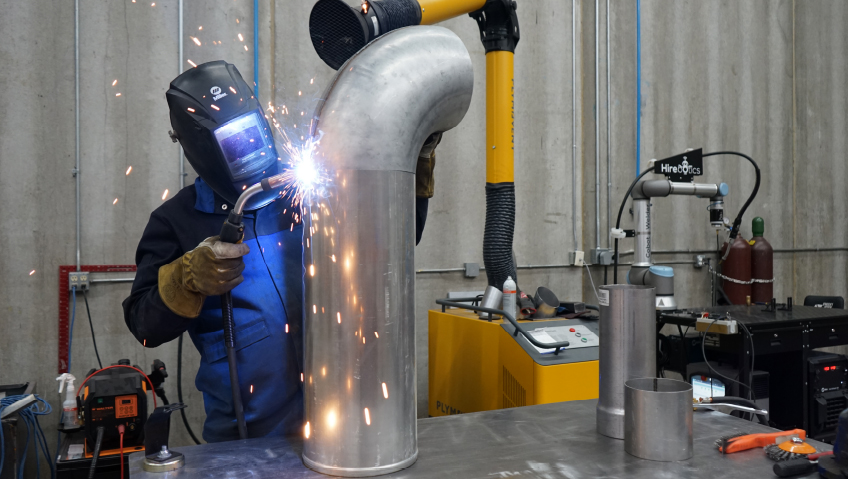
A typical project begins with a detailed understanding of the customer’s needs and operating conditions. From there, engineers develop designs and production teams prepare specialized tooling, such as jigs, to ensure consistent fabrication and assembly. The manufacturing floor includes several specialized workstations supporting key processes such as fabrication, welding, thermal blanket production, and product testing.
Throughout production, communication with the client remains a central part of the workflow. “We test, we update them at every stage, and we show them how the component looks as it moves through fabrication,” Laureola explains. “That way they are involved throughout the process rather than only seeing the final product.” This approach allows feedback to be incorporated in real time, helping to reduce delays and improving the overall efficiency of product development.
In heavy-duty applications, component failure can have serious consequences for both safety and productivity, and as a result, quality assurance remains a critical part of Stronix’s manufacturing philosophy. According to Laureola, quality begins with ensuring that the engineering and production teams fully understand the purpose behind each design. “Quality starts with understanding the ‘why’ behind what we are doing,” she says.
Many members of the Stronix team bring firsthand experience working in heavy-duty environments, and that practical perspective informs the design and manufacturing process. When engineers and technicians understand the conditions a component will face in the field, they are better positioned to identify potential improvements during production.
Automation also plays an important role in maintaining consistency, and Stronix incorporates robotic welding where possible to ensure reliable weld quality across components. The company also conducts pressure testing to verify the integrity of exhaust systems and other assemblies. Before a product leaves the facility, detailed inspections, including photographic documentation, confirm that it meets both internal quality standards and customer expectations.
Stronix works with OEMs throughout the entire lifecycle of product development. That process typically begins with collaborative engineering discussions, followed by design refinement and prototype development. Once a prototype is approved, the company can support low-volume production runs before scaling manufacturing to meet broader demand.
Low minimum order quantities (MOQs) are an important part of this process. Many manufacturers require customers to commit to large production orders even during early testing phases, but Stronix takes a more flexible approach that allows OEM partners to validate designs before committing to full-scale manufacturing. “We are happy to work with OEMs to test prototypes in the field before moving to larger volumes,” Laureola says. This flexibility helps customers refine designs based on real-world performance while minimizing financial risk.
While Stronix built its early expertise in the mining sector, the company now sees significant opportunity in other heavy-duty industries, with forestry and power generation representing key areas of growth. Each of these sectors relies on machinery that must perform reliably under demanding conditions, making them natural extensions of the company’s engineering capabilities.
One area where Stronix hopes to expand awareness is sound attenuation. In regions such as Australia, noise regulation already plays an important role in mining operations, particularly when sites operate near residential communities. Through its experience in those markets, Stronix can develop solutions that reduce machine noise while maintaining performance.
Although noise regulation is less prominent in North America, Laureola believes the issue deserves greater attention. “Noise fatigue is real,” she says. “Reducing noise improves safety and communication among workers.” By introducing these solutions to North American OEMs, Stronix hopes to encourage manufacturers to address noise reduction proactively rather than waiting for regulatory requirements.
Of course, environmental regulations also continue to shape the design of heavy-duty equipment, and to this end, Stronix specializes in exhaust systems and after-treatment technologies that help OEMs meet increasingly stringent emissions standards. For instance, modern machinery must comply with standards such as Tier 4 and Stage V emissions requirements. However, many manufacturers still operate or maintain equipment originally designed under earlier regulatory frameworks. The company helps bridge that gap by integrating updated emission systems into existing designs. “We can work with existing machinery drawings and incorporate modern after-treatment systems,” Laureola explains. By upgrading older equipment designs rather than replacing them entirely, manufacturers can extend the lifespan of existing product lines while meeting current environmental standards.
In addition to custom engineering work, Stronix also provides contract manufacturing services for OEM customers. If a manufacturer encounters supply chain disruptions or production delays with existing suppliers, Stronix can step in to produce components based on the customer’s drawings. This flexibility allows OEMs to maintain production schedules even when unexpected challenges arise.
The company also offers consignment stocking arrangements that allow Stronix to hold inventory on behalf of customers. These arrangements help OEMs manage space limitations and respond quickly to fluctuations in demand. “As a diversified supplier, we can help customers reduce risk by being another reliable option,” Laureola says.
Two areas where Stronix especially stands out are metal fabrication for exhaust systems and the design of thermal protection solutions. The company produces large-diameter exhaust pipes and complex metal components used in heavy-duty equipment. These systems often require intricate engineering to maintain airflow efficiency while accommodating the physical constraints of the machinery. In some cases, redesigning an exhaust system involves repositioning the entire assembly.
In addition to metal fabrication, Stronix manufactures thermal covers and engine wraps designed to manage heat within heavy-duty equipment. These thermal blankets help protect surrounding components, reduce fire risk, and prevent burns for operators and maintenance personnel. By tailoring materials and designs to specific machines, Stronix can ensure the thermal protection systems perform reliably under demanding operating conditions.
For all the technical complexity of its work, Stronix emphasizes the importance of relationships. Working closely with OEM engineers, product managers, and production teams helps build trust and ensure that solutions align with real-world operational needs, a collaborative mindset that proves particularly valuable in industries where equipment designs are complex and highly specialized.
Stronix’s internal culture also reflects the collaborative approach the team brings to customer relationships. The company operates around four core values: responsiveness, ensuring customers receive timely support throughout the development process; quality first, maintaining strict standards for design and manufacturing; drive, pushing the organization to continuously improve its capabilities; and transparency, helping build trust with customers and partners. Together, these principles guide both day-to-day operations and long-term strategy.
As the heavy-duty equipment industry evolves, manufacturers face increasing pressure to balance performance, safety, and environmental responsibility, and Stronix aims to support that transition by continuing to invest in engineering expertise and automation technologies that enhance responsiveness and scalability. Moving forward, the company also plans to strengthen its presence across industries where durable equipment and custom engineering solutions are essential.
For Laureola, the opportunity lies in helping OEM partners tackle complex challenges while delivering practical solutions that perform reliably in the field. “We are not focused on building parts in massive volume,” she says. “Our focus is on supporting complex applications where customization, durability, and engineering input really matter.”
By combining robust technical knowledge with collaborative development and flexible manufacturing, Stronix continues to position itself as a strategic partner for OEMs navigating the demanding world of heavy-duty machinery.