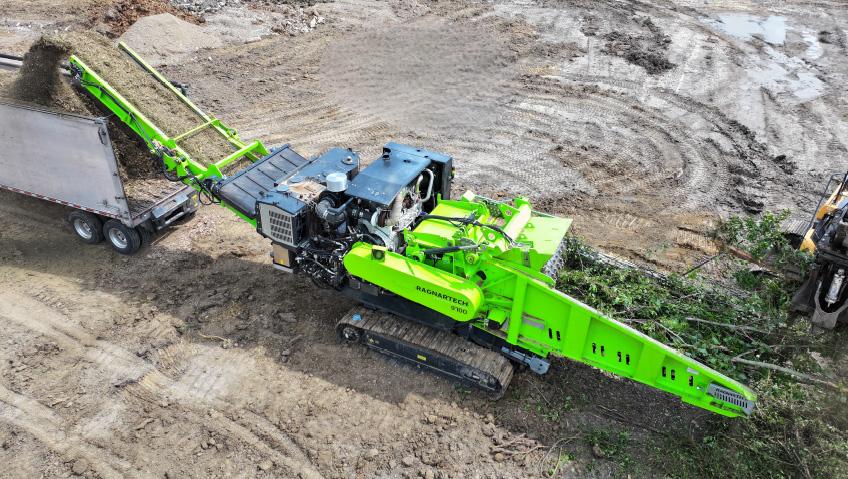
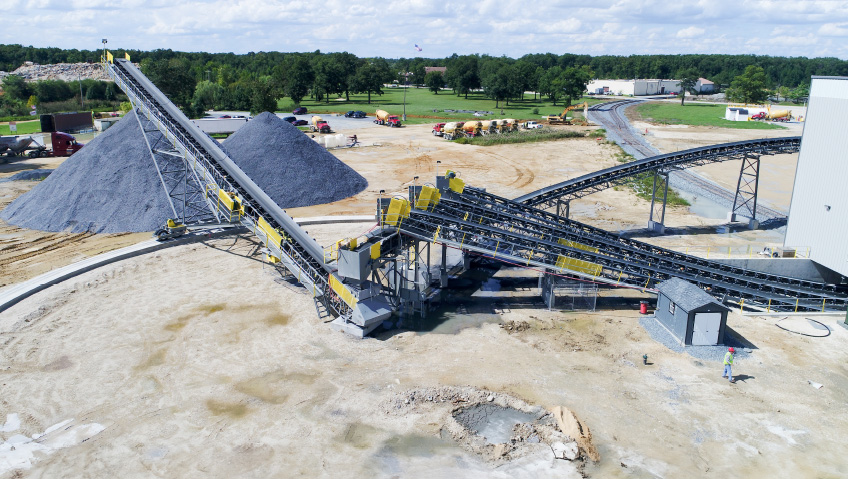
It is easy to forget how much our world relies on the quality of aggregates used in concrete and other applications. To ensure they supply end users with only the finest-quality stone, sand, and other products, large static aggregate plants trust Steel Systems Installation (SSI) for premium custom processing equipment and crushing plants. As an engineering and fabrication specialist in conveyors of any length and capacity, plus other related machinery, this thought leader will present its latest innovation, the Mule Screen, at CONEXPO-CON/AGG in Las Vegas from March 3rd to 7th this year following a seven-year development process.
Appropriately located in Quarryville, Pennsylvania, four decades in the industry has cemented SSI’s belief in doing things right the first time, establishing itself as a trusted voice in the field. Vice President Scott Gartzke is confident in the company’s new product, performance, and the game-changing capabilities it provides customers with. “We have an established track record and reputation for providing high-quality and customized solutions in the aggregate industry,” he says of the new product, a machine the company sees as important to the industry to improve product quality and significantly reduce maintenance.
SSI’s application of this machine is not only beneficial to reduce environmental impact, but also for companies’ operational and mining efficiencies. Higher water consumption increases the need for bigger and more settling ponds for slurry and post-operational water treatment processes to enable recirculation within the parameters of the Clean Water Act (CWA), administered by the Environmental Protection Agency (EPA) through the National Pollutant Discharge Elimination System (NPDES). These ponds also take up an enormous amount of space that could be used for mining. In addition, settling ponds are notorious for demanding continuous maintenance and call for high capital investment in heavy equipment, human resources, time, and effort.
The new system is, therefore, about to disrupt an industry ripe for modernization. Gartzke designed the Mule Screen system himself, noting that it is unique in the market. “We consider this to be the first vibratory machine that’s designed with rinsing aggregates as its primary focus while doubling as a fine material wash screen,” he explains. What sets the machine apart is a revolutionary overhead drive mechanism that runs three 900 RPM vibratory motors. As this eliminates the need for v-belts (flexible power transmission belts) that come with motor bases needing regular upkeep, maintenance is comparatively minimal, with zero oil changes.
Its operation is surprisingly straightforward. While two overhead motors spin toward one another, creating a linear motion, a third produces circular motion. The intersection of these two motions results in a thin elliptical motion that controls travel rate and bed depth for improved washing and rinsing action while minimizing the need for maintenance. With multiple sizes and deck configurations having the capacity to process 300 to 350 tons of stone per hour, the Mule Screen is an adequate size for industrial aggregate processing operations.
With the company maintaining a healthy stock of motors, these are easily replaceable, and older machines can be rebuilt—fine selling points and music to large operators’ ears. “Since you only need a crane and a wrench to unbolt them, anybody can unbolt and fit a new motor as opposed to traditional vibratory screens that mostly use eccentric shafts in an oil bath through bearings, which you have to be able to change,” Gartzke adds. This, of course, means less downtime as the usual lengthy bane of remachining housings is also brought to a timely end with this system.
The machine was also designed to integrate seamlessly into the SSI layout framework for design and setting up aggregate plants. As its system typically favors dry-sizing material first before rinsing, as opposed to doing it the other way around, it saves breathtaking volumes of water from being wasted. And, because rinsing consumes one and a half to three gallons of water per minute and washing takes five gallons per minute, the savings are notable. “We feel that we get more accurate gradation control utilizing dry sizing and then reduce water consumption by utilizing rinsing on sized aggregates,” Gartzke explains.
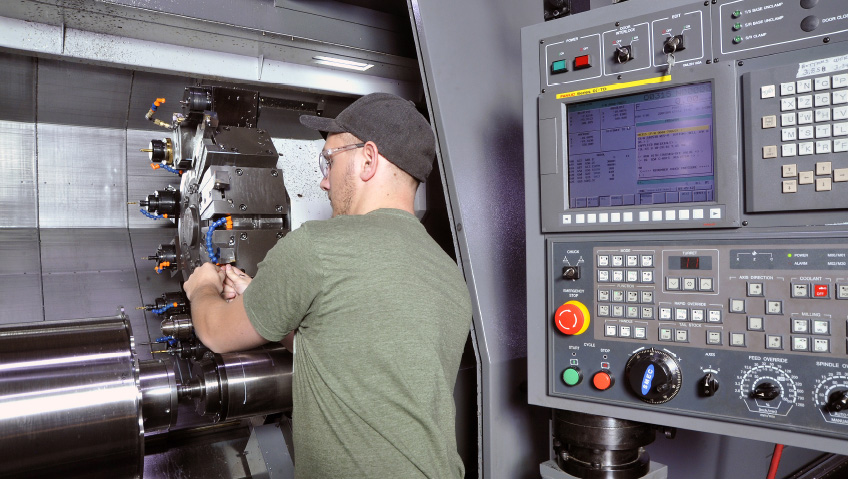
Stone is not the company’s only forte, however. The company has also built large sand-processing plants that require modular screen towers that it engineered and fabricated. Then there is of course the creative aspect of the business—one that Gartzke enjoys immensely and contributes to prolifically. To this end, technology-wise, the company invests in the best software to support its research and development, engineering, and the design work which underpins its fabrication. This level of attention to detail is part of its heritage.
In operation since 1987, the company was started by Scott Gartzke’s father, Craig Gartzke, and his partner, Rick Welch. Today, their sons run the company. Together, Scott Gartzke and his partner Joel Welch are proud to follow in their fathers’ footsteps. Gartzke remembers his father spending hours at his drawing board in their basement, designing new systems and finding ways of bringing them to life as he and Rick continued expanding the business, envisioning what it would one day become.
With the two founders now retired, the second generation of leaders has been at the helm of the company for the past seven years, to great success. As the grandson of a salesman in the industry following WWII, Gartzke is proud of the 75-plus years of combined expertise the families bring to the company. Performing like a small family itself, the team is comfortable and happy to work shoulder to shoulder. As a low-overhead business, the company’s frugality has translated into job security for the people who are its backbone. Genuinely caring about them means the company is also passionate about keeping its people safe in potentially hazardous jobs. “We want everybody to be safe in the process of doing a good job. It’s a dangerous industry and a dangerous job,” Gartzke says.
Following nearly 40 years of building the company into a stalwart in the aggregate industry, the team of 45 is as engaged as one could ever wish a team to be, committed to the company’s longevity and growing its customer base alongside its reputation. “Everybody is on board with providing a unique and quality product because what we do is exciting. Our people are all skilled,” Gartzke says of the talented engineers and fabricators who take pride in developing premium systems for customers.
For large static aggregate plants looking to purchase the new machine, the typical lead time is 20 weeks, or slightly less in pressing situations. Gartzke is confident in the company’s ability to meet high demand worldwide. “We have no problem working on a national scale and potentially even on a global scale if we have customers in other areas,” he says. Moving ahead, the firm is considering an expansion of its fabrication facility to accommodate its growing clientele. As nearly all its business comes through repeat customers and recommendations, consistency is key. With these customers spending impressive sums for the best crushing plants around, living up to its reputation for excellence is central to the company’s continued success.
By driving its own efficiency, SSI’s commitment to improving and optimizing its customers’ efficiency is a natural response to maintaining its position within the industry. As a result, the company’s quality continues to lead the way, alongside its innovation. “Everything else comes secondary to quality,” Gartzke says. “We’re always loyal to our word.”